Packing decisions
What to carry with you instead of loading on the moving truck
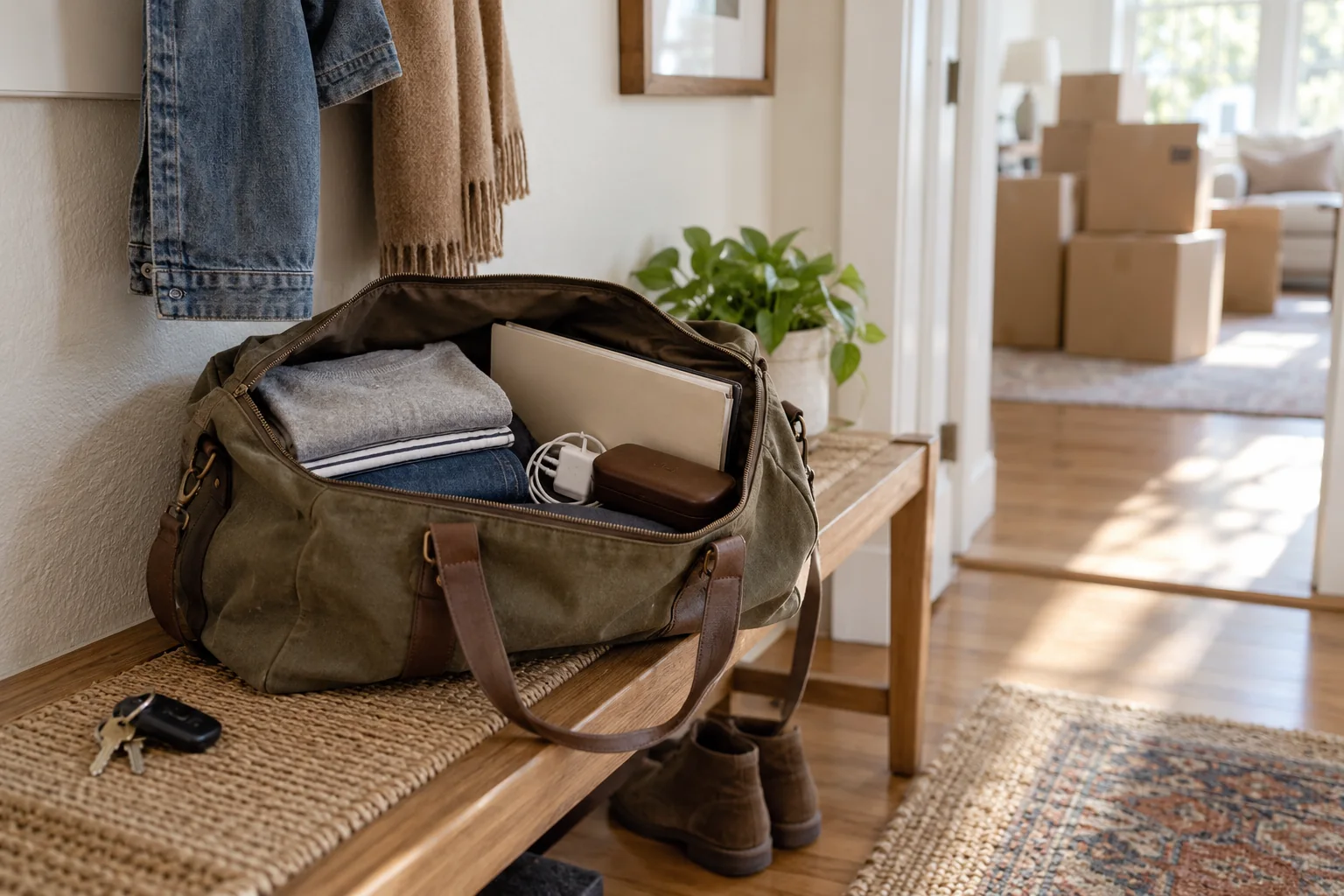
A moving truck and your personal travel bag serve different purposes. The truck carries household goods that can be loaded, transported, and unloaded on the move's schedule. Your travel bag holds what you must be able to reach during the trip and before the shipment is unpacked. Making that distinction early keeps a passport, medication, key, or charger from disappearing into a carton at the wrong time.
The right carry-with-you list depends on your route, whether you will drive or fly, who is traveling, and how long you may be separated from the moving load. It also depends on the rules of the carrier handling the shipment. Do not rely on a generic list as a statement that an item is permitted or prohibited. Check the carrier's current written terms and ask about uncertain belongings before packing them.
Start with access needs. Ask what you would require if the truck arrived later than expected, if you spent an extra night in transit, or if you could not open all the boxes immediately. Then decide which items need to stay under your direct control, which can be placed in a clearly marked first-use carton, and which can travel with the ordinary load.
Separate the travel bag from the first-use box
A travel bag stays with you or a trusted household member throughout the trip. It should hold documents and personal items you may need before the moving load arrives. A first-use box may travel in the truck but should be easy to locate at unloading. It can contain ordinary household supplies that help you begin living in the new home.
Do not use “essentials” as one undifferentiated category. A spare towel may be important after arrival but unnecessary during travel. A driver's license may be necessary before arrival and should not be on the truck. A charger may belong in the travel bag if it supports directions, communication, or work. Decide by timing and access, not by how valuable an item feels.
Write two short lists. The travel list names the items you will personally carry. The first-use list names boxes that must be identified and accessible at delivery. Include box codes for the latter. If you combine the lists, someone may assume a needed document is in the truck or that a bulky household item must fit in a personal bag.
Confirm who carries each travel bag. In a household with several travelers, “someone has it” is not enough. Assign documents, keys, medication, and chargers to a named bag and person. Check that arrangement at departure, at any overnight stop, and on arrival.
Keep identity and move documents accessible
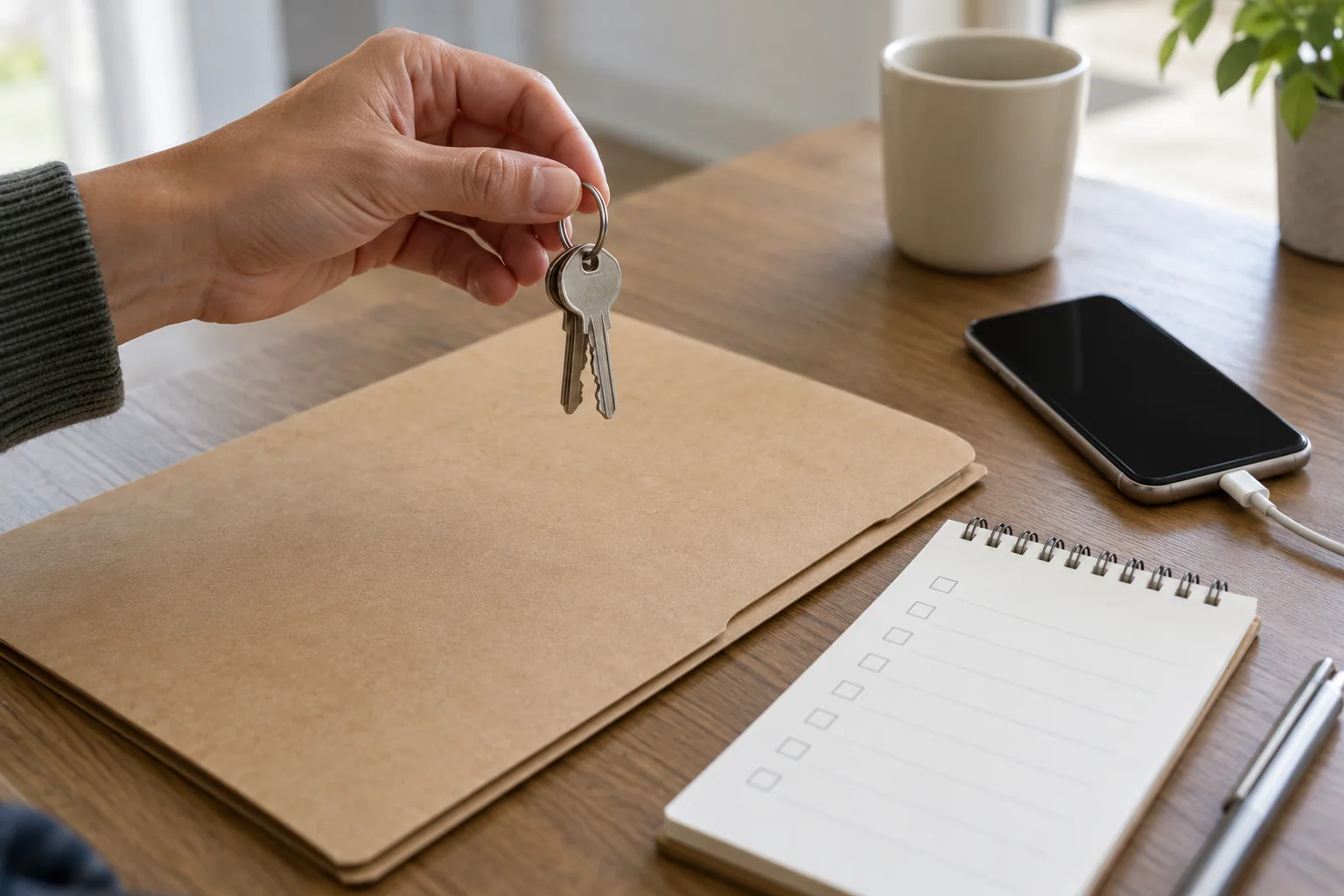
Consider the identity documents needed for travel, housing access, and any transactions scheduled around the move. Keep them in a secure, reachable place. The exact documents depend on your circumstances: some households may need passports or travel records; others may need a lease, closing papers, or building instructions.
Make a small move folder, physical or digital, with contact information, relevant confirmations, access instructions, and the transport paperwork you have been given. Save an offline copy of information you may need where reception is poor. Protect personal details and use an appropriate method for confidential files. A phone photo can be convenient, but do not assume it is the only copy you should have.
Keep the keys, fobs, and access codes needed for the new property separate from boxes on the truck. Confirm when each will be available and who holds them. A new door key packed with furniture is not useful if the truck cannot be unloaded until the door opens. The same applies to parking or elevator access that must be arranged before delivery.
Do not put complete account numbers, passwords, or sensitive document lists on the outside of a carton. If you choose to ship copies or older records, label the box broadly and keep its detailed contents in a private inventory. Decide which originals need direct control during transit.
Plan for medication and personal care needs
Identify medications and health-related items that you may need during travel or before the household shipment is available. Keep them accessible according to the instructions that apply to those products and the advice of your pharmacist or clinician. Do not assume a moving vehicle provides suitable storage conditions, especially if the trip includes temperature extremes or delays.
If an item has a special storage or handling requirement, check it before move day with a qualified source. You may need a different container or travel plan. This guide cannot determine the right method for a particular medicine or device. The important planning step is to avoid sealing a necessary item in a carton without knowing when and how you can reach it.
Include ordinary personal items that support the first day: glasses, contact-lens supplies, hearing-device accessories, a basic change of clothes, and hygiene items relevant to the travelers. A household with infants, older adults, or people with specific care needs should build its list from actual routines, not a standard moving checklist.
Keep emergency contact information and any required care instructions accessible to the responsible person. If several people share responsibility during the trip, agree where the information is stored and how they will reach it. Protect private health information while keeping essential details available to those who need them.
Carry the tools that make the trip work
Phones, chargers, navigation tools, and payment methods are often needed before arrival. Put each needed cable or power adapter with the device it serves. Check it while packing. A fully charged phone is useful, but a long drive or an overnight delay may still require a charging plan.
If a laptop or tablet is needed for work, study, or records access during the move, decide whether it should travel with you. Keep its charger and any necessary authentication device together under suitable security. For a work-managed device, follow your organization's transportation and information-handling policy.
Consider the route. If you will drive, you may need vehicle documents, toll arrangements, parking instructions, and a way to contact the transport provider. If you will fly, baggage and security rules affect what can go in a carry-on bag. Check the relevant current rules for the actual mode of travel rather than assuming the moving-truck plan covers your personal journey.
Keep a modest amount of practical supplies for transit: water where appropriate, a snack, weather-ready clothing, and anything the travelers will actually use. Do not let the bag become so heavy or crowded that the most important items are difficult to reach. If the trip is long, divide supplies among travelers deliberately.
Decide how to handle valuables and irreplaceable items
A high-value or irreplaceable object may deserve a separate handling decision, but “valuable” is not a single category. Some items are financially costly; others have personal significance. Consider whether you can carry the item securely, whether it is allowed by the travel provider, and whether moving it personally creates its own risk.
Small jewelry, family records, and unique keepsakes may fit in a personal bag. Large artwork or delicate equipment may require professional packing, special transport, or a documented arrangement with the moving provider. Do not place an object in a car solely because it feels safer there. Evaluate the route, weather, stops, and who will remain responsible for it.
Make a private record of any item handled separately. Note who has it and where it will be at arrival. Avoid writing exact values or descriptions of valuables on exposed luggage or cartons. If insurance or coverage matters, review the relevant policies and carrier terms directly; this article does not tell you what protection a particular move provides.
The best choice may differ from item to item. The goal is controlled handling and a clear record, not a universal rule that every expensive possession must stay with you. Ask the carrier about any item whose status under its terms is uncertain.
Keep children and pets in the travel plan
If children are moving with you, prepare what they will need through the journey and the first period at the new home. Clothing, comfort items, feeding supplies, and activity materials vary by age and routine. Pack those in a bag that the responsible adult can reach without unpacking the vehicle.
For pets, identify food, water, containment equipment, medications if any, and records needed for the actual route and destination. Follow guidance from your veterinarian and the applicable travel provider. A pet's needs should be planned separately from ordinary household boxes because the items may be needed at unpredictable points in the trip.
Decide where children or pets will be during loading and unloading. Open doors, moving furniture, and vehicle traffic can make those periods difficult to manage. An adult should know the plan and have the relevant supplies. The answer may involve a separate caregiver or a quiet area, depending on the household.
Do not pack a familiar comfort item simply to complete a room early. Keep the chosen item available until it is no longer needed, then put it in the appropriate travel bag. A small change in packing order can make the transition easier without adding another box.
Check carrier restrictions item by item
Moving providers can have different rules for food, liquids, chemicals, batteries, plants, weapons, valuables, and other items. The rules may depend on the service and route. Read the provider's current written list, contract, and packing instructions. If an item is not clearly covered, ask the provider before it is loaded.
Do not treat a “do not load” decision as permission to put the item in your own vehicle or luggage. Your travel mode may have separate legal, safety, and provider requirements. Check those independently. A household needs a lawful, suitable plan for an item, which might mean using it, giving it away, returning it, disposing of it properly, or arranging a permitted method of transport.
Make a small unresolved-items list while sorting. Record the item, the question, the source you will check, and the final decision. This prevents an uncertain container from being set on a loading pile in the final hour. Keep a copy of any written answer from the provider that affects your packing plan.
If you hire a mover, distinguish between the household's “keep with us” list and the provider's restricted-items list. They overlap, but they are not the same. You may choose to carry an ordinary permitted item because you need it early. Conversely, an item the mover will not accept still requires a separate decision about how it will be handled.
Use a practical last-day bag
Pack travel bags before the last wave of cartons is sealed. Lay out the clothing and personal supplies needed through the last night and the trip. Check every person's list. A reusable packing checklist can be helpful, but cross off an item only when it is physically in the correct bag, not when you intend to pack it later.
Leave space for items that remain in use until departure: toothbrushes, current medication, phones, chargers, keys, and documents. Put a reminder on the bag or final-day list. These last items are easy to overlook because they are part of daily routine rather than the visible packing project.
Separate dirty laundry, wet toiletries, and food from documents and electronics. Use suitable small containers or pockets. The purpose is simple organization, not a specialized travel system. If you will stop overnight, put the overnight items where they can be reached without unloading everything.
Before leaving, check the bags against the list. Ask each traveler to confirm the items they are personally responsible for. Make a final look through drawers, outlets, bathrooms, and the area where the move paperwork was kept. Confirm the new-home access items are with the person who will arrive first.
Coordinate with the packing order
The personal travel list affects what can be packed early. Once you know the items that must stay available, remove them from the ordinary packing area or mark their storage place clearly. Do not let a helper assume that everything on a cleared counter belongs in a carton.
Pack low-use belongings first and leave the travel kit and first-use boxes for later. The guide choosing a packing order when you still live in the home offers a way to keep daily routines working while rooms are gradually packed. Adjust that order if a specific traveler needs an item for longer.
Keep the last-use group in one place rather than scattered across rooms. For example, the final kitchen supplies can remain together until the last meal, and the final office charger can stay with the laptop. When you finish using an item, move it to its assigned bag or box immediately. This reduces the number of items left loose at departure.
Tell anyone helping with packing which bags and items are excluded from the moving load. A bright temporary note on a designated table can help, but do not rely on a sign alone. The responsible person should keep the travel bags under control during loading and verify them before the truck leaves.
Prepare for a delayed or split arrival
A shipment may not be available at exactly the moment you enter the new home. Even a local move can involve a long unloading day, a building access issue, or separate vehicles. Plan what you would need for one additional night without assuming you can open every box. This is a scenario for planning, not a prediction that the move will be delayed.
Check whether your travel bag supports that scenario: necessary medication, clean clothes, documents, basic personal care, and access to communication. If a first-use household box is on the truck, know its code and arrange for it to be unloaded accessibly. Do not put a critical personal item in that box if you cannot tolerate a delay in reaching it.
If the move includes temporary lodging or storage, assign a destination for each bag and box. “New home” may not be the next place you sleep. Keep your personal kit appropriate for the actual itinerary. Review any booking or access details before departure and save them where they can be reached offline if needed.
At arrival, place travel bags in a controlled spot away from unloading traffic. Check that the documents and keys remain with the responsible person. The first-use box can then support ordinary tasks such as cleaning, eating, or making beds while the rest of the shipment is sorted.
Reconcile what went where
Keep a short three-part record: carried personally, loaded on the truck, and handled separately. You do not need to list every household object, but you should record important exceptions and priority boxes. Box codes help you check whether the first-use cartons reached the right room.
If an item cannot be found, look first at the record and the last place it was used. A charger may be in the travel bag rather than the office box; a document may be in the move folder. Reconcile these possibilities before deciding it is missing. If a shipment item handled by a provider appears missing or damaged, follow the provider's reporting process and keep relevant documentation.
Once the household is settled, return travel-only items to appropriate storage. Do not leave critical documents or medication in a bag that will be tucked into a closet. Mark priority boxes off the list as they are unpacked. The same simple record that kept items accessible during the move can help confirm that they are accounted for afterward.
For larger belongings that will travel with the moving load, follow a separate preparation plan. How to prepare furniture for a move covers the measuring, disassembly, hardware, and placement decisions that do not belong in a personal travel bag. Keeping those two streams distinct makes both easier to manage.
The useful question is not “Is this item important?” Many belongings are. Ask instead when you will need it, who must control it, and whether its transport has special requirements. Write those answers down, then pack the travel bag and moving boxes to match them.