
Packing decisions
Choosing a packing order when you still live in the home
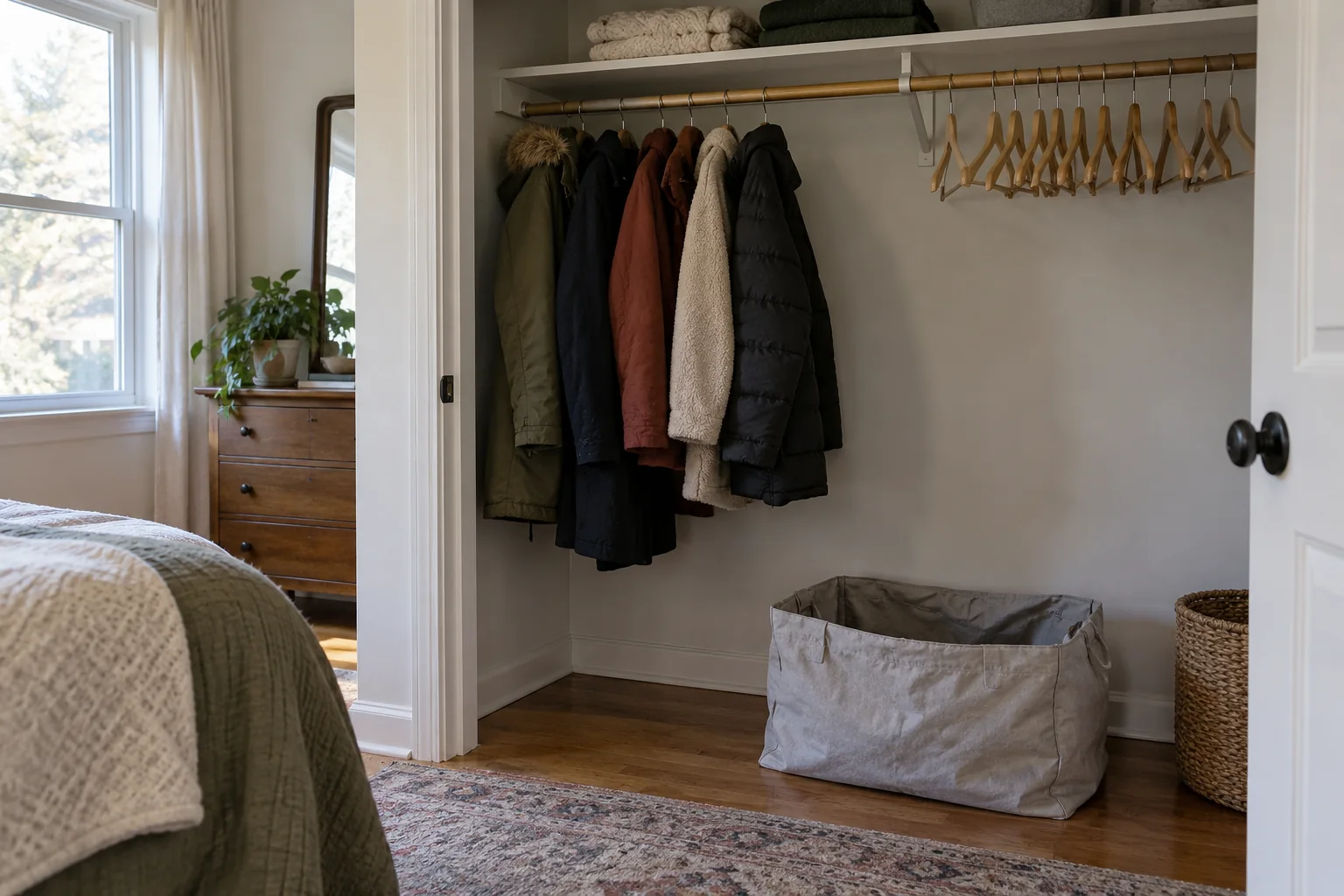
Packing order is a decision about access. The things you use least can leave shelves early. The things that keep the household functioning must stay available until the relevant day. A workable sequence reduces the number of cartons you reopen while you continue to cook, work, sleep and care for others in the home.
Start by looking at the time between now and the move. Ask which activities will happen before the last night: meals, laundry, school, work, appointments and ordinary cleaning. Identify the items each activity needs. Then pack around those needs, rather than working room by room simply because one room is closest to the door.
The plan should be adaptable. A child may need a school project, a guest may arrive or the move date may shift. Keep a way to find packed items and a clear place for the essentials you have deliberately left out. The aim is to make progress without turning the occupied home into a storage maze.
Make three practical access groups
Sort belongings by when they are needed, not by how much you like them. One group can be packed now because it has no expected use before the move. Another can wait until the final week. A small final group stays available until the last day or travels with the household. These are planning categories, not rigid labels printed on every carton.
Start with examples you can verify in your own routine. Off-season clothing, unused decorative objects and spare linens may be early candidates. Daily medication, work devices and a minimal set of dishes usually remain accessible. The middle group may contain most clothing, books and kitchen equipment that you use occasionally but can live without for a few days.
Look for dependencies. You might be able to pack a serving platter now, but not the only pan used for dinner. A lamp in a rarely used corner may go early, while the desk lamp needed for late work cannot. When a household member names a specific near-term use, move the item to a later group rather than assuming it will not matter.
Record exceptions. A suit worn only rarely still belongs outside the first packing group if you have an event before moving day. A seasonal jacket may be needed for a change in weather. The categories help you ask useful questions; they do not replace knowledge of the household's actual calendar.
Set up a packing zone without blocking daily life
Choose a place for empty cartons, finished cartons and materials. Keep the zone out of doorways, shared exits and routes that people use every day. A corner of a room may be enough. The available space should determine how many cartons you prepare at once; a floor covered in half-packed boxes is difficult to live around.
Keep the supplies you will use repeatedly in one container: tape, marker, suitable wrapping material and the working inventory or label list. Return them there after each session. Searching for the tape after dinner can consume the time you planned to spend packing. A simple setup supports short sessions when the household is still busy.
Separate finished cartons from cartons that remain open for active sorting. Close and label a carton only when its contents are decided. If an item might still be needed, consider whether it belongs in a later group. A sealed box that everyone opens twice is evidence the timing was wrong, not a failure of willpower.
Keep large furniture in normal use until its removal is scheduled. Avoid stacking cartons in front of closets, a washing machine or the only clear path to a bedroom. The home still has to function. Ask every household member which routes and surfaces cannot be taken over by packing.
Pack low-use items with a clear destination
Begin with possessions that will not be needed before arrival and that have an obvious place in the new home. Decorative objects, surplus serving pieces and archived paper may fit. Pack one defined group at a time. A carton of unrelated leftovers is hard to describe and harder to unpack.
Use labels that help at the destination. Identify the intended room and a few distinguishing contents, such as living room, framed prints and shelf objects. A label saying miscellaneous may be easy to write today, but it will not help anyone find a particular item later. Keep private information off the outside of a carton when the description would reveal something sensitive.
Check for items that should not travel in a general shipment. Some belongings need separate handling, return to another owner or another form of disposal. Deal with them before sealing cartons. Do not let the desire to clear a shelf turn every object into a moving box without a decision about its destination.
Make an inventory note for finished groups. It need not list every spoon. It should distinguish boxes that might otherwise look alike and identify important contents. If you later need to open one, note the change so the label stays accurate. An early packed carton may sit for weeks; the record should still make sense at delivery.
Preserve the kitchen's minimum working set
Decide how many meals the household will prepare at home before the move. Keep the cookware, utensils and dishes those meals require. Pack duplicates and equipment not on the planned menu. If the household will cook breakfast and dinner for another week, removing every pan on the first packing weekend creates unnecessary expense and inconvenience.
Keep a small place for the working kitchen set. A single cupboard or shelf can make it clear what remains in service. Ask household members to return those items there after washing. This prevents the last usable mug from being sealed inside a carton because it was sitting among packed dishes.
Consider perishable food separately. Plan meals around what you already have, but do not treat every ingredient as worth transporting. Check the destination and travel conditions before deciding what can go. Avoid inventing a safe method for an unfamiliar food or transport situation; use applicable food safety guidance when needed.
The guide to packing a kitchen without losing track of essentials can help define the working set and the first items needed after arrival. Keep those items together or clearly labeled. Kitchen packing is easier when the household knows which day cooking will end at the old home.
Keep clothing and laundry on a timeline
Pack clothes that will not be worn before the move. Then prepare a realistic selection for the remaining days, including work, school, weather and travel. Count laundry opportunities. A small final wardrobe works only if the household has the means and time to wash it when planned.
Do not pack every spare towel or sheet if a delayed departure would leave no clean replacements. Keep a modest reserve where the household can find it. Identify which bedding will be used on the last night and how it will be packed after people get up. That last-night bedding should not disappear into an early carton because it looked like extra linen.
Set aside clothing needed for moving day and the first period after arrival. Keep it with the household rather than in a carton that might not be unloaded promptly. If people are traveling separately, assign their bags individually. A shared bag can become unavailable when one person takes a different route.
Empty laundry baskets deliberately. They may be useful for final soft items, but that plan needs to be known. Avoid leaving damp clothing inside a closed container. The packing sequence should include the last laundry cycle and the place clean items will go afterward.
Protect work and school routines
Identify devices, materials and documents needed for scheduled work before the move. Keep the minimum working setup accessible. Ask when the last online meeting or school assignment will happen from the old home. Pack support items such as chargers only after those activities are complete or after a replacement is clearly available.
Set a shutdown point for the work area. Before that time, avoid using the desk as a carton staging surface if someone still needs it. After the final session, disconnect equipment in an organized order and keep essential cables with the device they serve. An unlabeled bundle of similar cords can slow the first workday at the new address.
For children, identify the materials and comfort items needed through the final day. A favorite book may be used every night even if it sits on a shelf that otherwise looks ready to pack. Ask the child or caregiver about routines rather than guessing from the room. Keep school bags and required papers separate from general toy cartons.
Make a plan for pets' ordinary supplies if relevant. Food, leads, carriers, bedding and routine records may need to travel with the household. Keep them accessible during packing and travel. Do not stack finished cartons where they block a pet's usual water or resting area.
Handle bathrooms and cleaning supplies late
Pack spare toiletries before daily-use items. Keep enough for the household through the final morning and the trip. Assign one bag or container for those essentials. If several people share a bathroom, check what is communal and what each person expects to carry.
Leave cleaning materials needed for the final handoff accessible. Separate them from anything that cannot be transported under the chosen arrangement. Follow product labels and the relevant disposal guidance. Do not mix leftover chemicals or pour them into an unfamiliar container simply to save packing space.
Plan the last cleaning session around the key return and vehicle schedule. If the household will clean after furniture leaves, keep the necessary supplies and a way to remove them afterward. A vacuum placed on the truck at the start of loading cannot be used for the empty-room cleanup you planned.
Identify what stays with the property. A renter may need to return keys or leave provided equipment in its proper place. Keep those items outside moving cartons. When in doubt about a furnished or shared item, resolve ownership before loading rather than assuming it belongs to the household.
Choose an order for each packing session
A short session works best with a defined target. Choose one shelf, category or section that can be finished in the available time. Gather supplies, decide what stays accessible, pack the selected items and label the finished carton. Leave enough time to clear the workspace afterward. Half-completed piles increase friction for the next day.
Work from lower-use groups toward higher-use groups over successive sessions. Do not necessarily empty an entire room at once. A bedroom may contain off-season clothing that can go today, ordinary clothes for next week and bedding for the last night. Treat those as different packing times even though they share a location.
Estimate supplies based on the actual groups you will pack. The guide to estimating packing supplies for a household helps turn the inventory into a practical purchasing list. Keep a small supply buffer if the plan requires it, but do not use a large stack of cartons as a substitute for deciding what will travel.
If progress stalls, check the decision blocking it. You may lack a destination for the item, need to confirm whether it is allowed in the shipment or be waiting for a household member to choose what to keep. Resolve that question. Packing faster will not fix a missing decision.
Mark what can be reopened and what cannot
Some cartons can be sealed early with confidence. Others contain items that might be used if plans change. Mark the second group in the inventory and keep it accessible without making it the default storage place for everything uncertain. A small number of recoverable cartons is manageable; a room full of possibly needed cartons is another form of clutter.
If you reopen a carton, update its label before sealing it again. Removing one device or adding another changes what the description means. Do not assume you will remember the change at the destination. A quick note takes less time than searching several boxes after arrival.
Set a point when the household will stop opening ordinary packed cartons. The date may be the day before loading or earlier if the vehicle is staged. After that point, handle urgent needs from the final-use bags where possible. A clear cutoff helps the inventory reflect what actually travels.
Keep personally important papers and immediate-use items outside this system. They should have a separate travel plan. A carton marked open first can still be loaded behind other furniture or arrive later than the people. Do not make a critical medication or travel document depend on that carton.
Prepare the last twenty-four hours
Write a final-use list for the last evening and morning. It may include bedding, toiletries, a small kitchen set, cleaning supplies, chargers and clothing. Assign who packs each group after its final use. An item can be intentionally left out without being forgotten when it appears on the list.
Decide which bags travel with people and which final cartons go on the vehicle. Keep the bags separate from the loading area. Tell helpers which belongings must remain with the household. A color tag or a designated corner can help, provided everyone understands the method and it is not easily confused with ordinary packed items.
Finish packing before the crew or helpers need to carry belongings, apart from items that must remain in use until departure. If the plan depends on last-minute packing, identify the time and person responsible. Do not assume loading and final household routines can happen simultaneously without interference.
Before leaving, check the rooms in a consistent order. Look in drawers, high shelves, the laundry area and any separate storage space. Compare the remaining items with the final-use list and the leave-behind list. A last check is more reliable when the packing sequence has already reduced the number of loose belongings.
Ask each household member to check their own final-use items before the last carton is sealed. A shared plan is easier to follow when the people who use the items confirm the timing. Record any change to the final-use list, especially if someone will travel separately or arrive later.
Adapt if the move date shifts
A delay does not require unpacking everything. Start by identifying what the extra days demand: clothing, kitchen equipment, work materials or school supplies. Retrieve only what the household needs and update the inventory. Keep the early packed low-use groups closed if they still have no expected use.
If the move comes sooner, identify the minimum functions the household must preserve through departure. Pack the remaining middle-use group and set an earlier shutdown point for each routine. Ask for help with defined tasks instead of handing someone an entire room without a packing decision. Clear assignments make a compressed schedule less chaotic.
Review the destination plan as well. An item you kept out because it would be needed immediately may need to travel with a person if delivery timing changes. A carton intended for the first day might instead belong in the travel bag. The order is useful because it can change with the actual timing, not because it predicts every event.
The sequence is finished when every remaining item has a purpose before departure, a transport plan or an explicit decision to stay behind. That is a more dependable stopping point than a room that merely looks empty. It also leaves the household able to live normally until the last useful day in the old home.