Moving day and arrival
What to do with boxes and packing materials after a move
After the essential rooms are unpacked, the new home often fills with empty cartons, paper, wrap, and tape. Clearing them takes more than putting everything in one bin. Some boxes are worth reusing, some materials are accepted by local recycling programs, and some need a different drop-off or disposal route. Start by separating materials as you unpack. Then check the rules for the specific city, building, or waste hauler that serves the new address.
Do not clear every carton at once. A box and its padding may be useful evidence if a shipped item was damaged or a piece is missing. Keep those materials until the item is documented and the mover's process is understood. For ordinary packing waste, use a simple sorting area so it does not block exits or daily routines.
Create a sorting spot before the pile grows
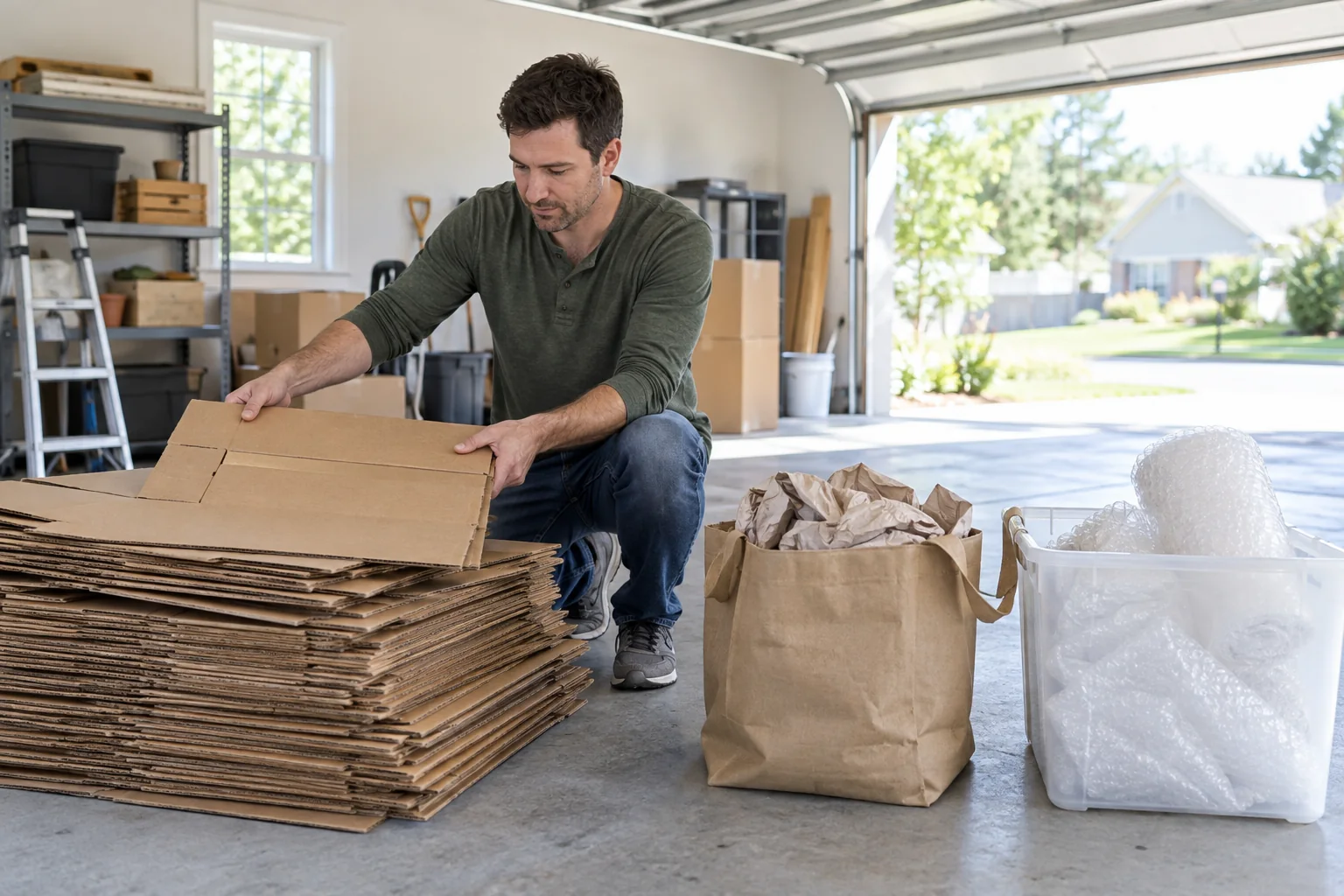
Choose a dry area near the rooms being unpacked. Put reusable boxes in one stack, flattened recyclable cardboard in another, paper in a bag or carton, and plastic film or bubble wrap in a separate container. Keep trash separate. A few clear categories are easier to maintain than a complicated system that no one else in the household understands.
Keep the area away from doors, stairs, heaters, and cooking equipment. Loose paper and flattened boxes can spread quickly across a floor. Clear the route at the end of each unpacking session. If the building has a shared recycling room, check its hours and limits before carrying a large stack there. Some properties require boxes to be flattened or tied, while others use a bulk pickup process.
Use a small label or note for materials being held because of an open damage claim. Do not mix them with the giveaway pile. The condition of a crushed corner or the way padding was arranged may matter later. Once the issue is resolved or the provider confirms what it needs, those materials can be sorted with the rest.
Check local rules before filling the bin
Recycling acceptance varies by community and sometimes by building. Look up the new address on the local public works, sanitation, or waste hauler site. Check whether cardboard goes curbside, whether it must be cut to a size, and whether bulk quantities need an appointment. If you live in an apartment, the building's instructions may add rules about where and when to place material.
The U.S. Environmental Protection Agency's common recyclables guide says cardboard boxes are generally recyclable and should be flattened, while reminding readers to check local programs. EPA also notes that plastic bags, wraps, and films should not go in a household recycling bin. These national guidelines are a starting point, not a replacement for your local acceptance list.
If the local guidance is unclear, ask the waste provider or property manager. Do not assume that a recycling symbol or a product label guarantees curbside acceptance. A material accepted at a retail drop-off may be rejected in a mixed household bin. Incorrect sorting can cause an entire container to be handled differently than you expect.
Reuse sound cartons first
Inspect boxes before offering them to someone else. Strong, dry cartons with intact bottoms can be folded flat and stored for a short time or passed to a neighbor planning a move. Boxes that carried books or dishes may have reinforced sides; keep those if a future storage need is real. A damp, crushed, or torn box is less useful and may fail when lifted.
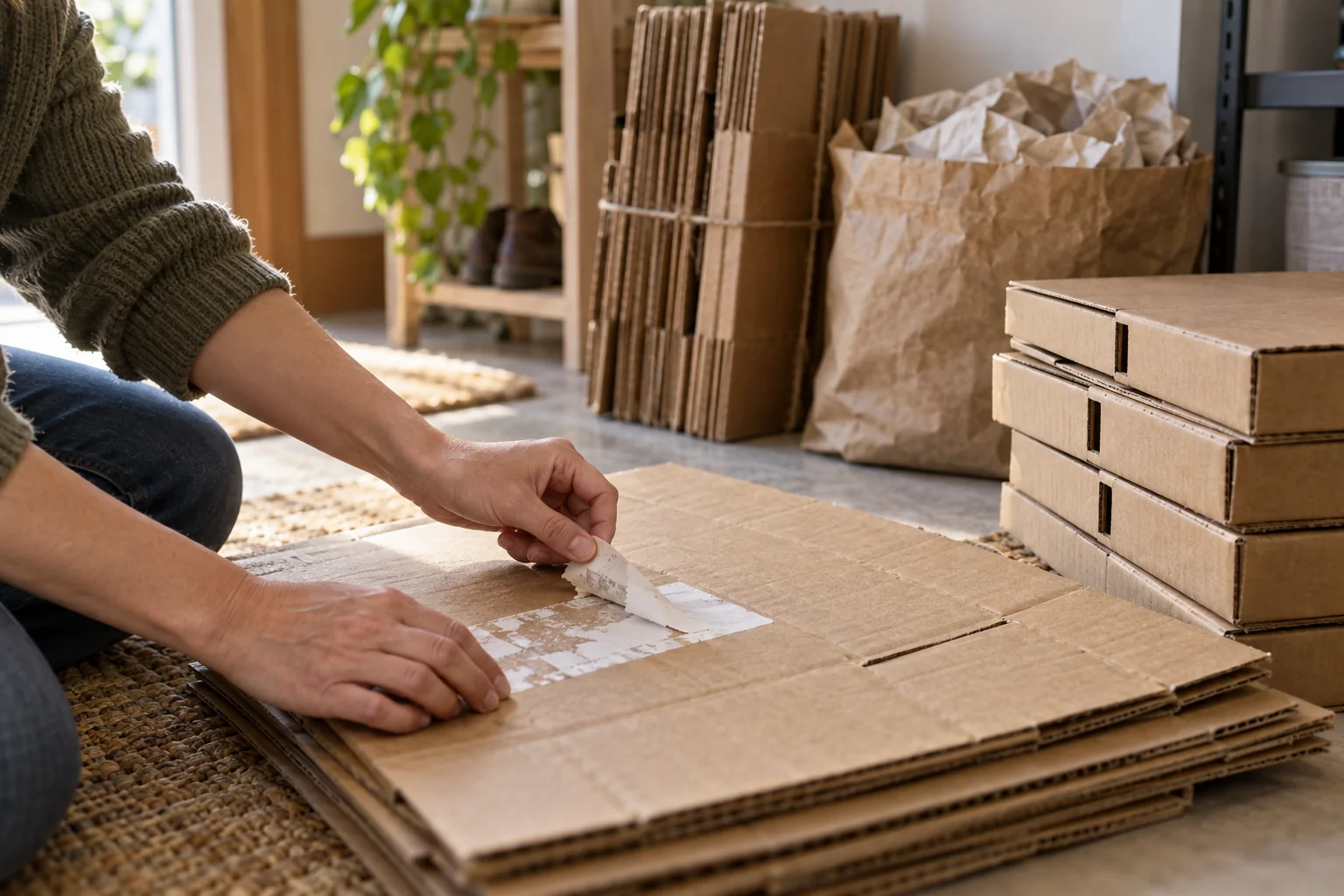
Remove or cover old shipping labels and personal information. A label may show names, phone numbers, or the old address. Peel it off or black out the information before a box is reused or shared. If the box contains a description of valuable contents, remove that note too. This is a simple privacy step that is easy to miss during a busy cleanup.
Set a limit on how many empty boxes to keep. A stack saved for a hypothetical future move can occupy a room for years. Keep a few sizes that support a specific storage task, or schedule a handoff to someone who wants them. Offer only what is clean and structurally sound. If a recipient needs boxes by a particular date, make sure they can collect them before the stack becomes an obstacle.
Flatten and prepare cardboard
Remove contents and loose packing material before flattening. Cut the tape or open the seam, then collapse the box without leaving sharp staples or hard plastic pieces exposed. Some programs accept tape on cardboard; others provide more specific preparation rules. Follow the local instructions rather than spending hours peeling every strip without a reason.
Keep cardboard dry and free of food or heavy contamination. A box that sat in a wet garage may no longer be suitable for recycling. If the local program accepts it, flatten the carton to the required size and place it where the hauler or building directs. Do not force a large stack into a small shared bin so that the lid cannot close or other residents cannot use it.
Corrugated moving boxes and thin paperboard packaging may have different collection rules. The EPA's general guidance says to check the community program for accepted paper products. If a box has a waxy, plastic-coated, or heavily laminated surface, verify it before adding it to ordinary cardboard. The same goes for unusual custom packaging that looks like cardboard but has mixed layers.
Separate packing paper from household paper
Clean, dry packing paper may be recyclable under a local paper program. Some households also reuse it for storage, crafts, or another move. Flatten or fold it to reduce volume. If it is torn into small scraps, check whether the local program accepts loose pieces; tiny pieces can behave differently in sorting equipment. Bagging rules also vary, so do not seal paper inside a plastic bag unless the program asks for that.
Keep paper that touched leaking liquids, food, or other contaminants out of the clean-paper stream unless your local program says it can handle that material. Protective tissue, newsprint, and brown kraft paper may have different coatings. When in doubt, read the local list or ask the provider rather than treating every brown material as identical.
Shredded paper requires special attention. EPA says acceptance depends on the local program. A bag of shreds from old paperwork may need a separate drop-off or disposal method. Do not mix it into the carton stack simply because both started as paper.
Handle plastic film and bubble wrap separately
Plastic stretch wrap, air pillows, bubble wrap, and plastic bags can look recyclable because they are plastic, but many curbside programs do not accept flexible film. EPA says bags, wraps, and films do not belong in the household recycling bin and points to retail or other collection options where available. Confirm what a particular drop-off accepts; a store bin may accept some clean film but not every kind of bubble or padded material.
Keep flexible plastics clean and dry if you plan to take them to an approved collection point. Remove nonplastic labels or tape when the collection instructions require it. If there is no local option, use the disposal route the waste provider specifies. Wishfully placing film in the curbside bin does not create a recycling program for it.
Reuse can be simpler than disposal when the material is intact. Air pillows or bubble wrap can protect a stored item or be given to someone shipping a package. Set a practical limit; torn wrap and deflated pillows are unlikely to help. Keep loose plastic away from children and pets and do not let it accumulate in walkways.
Deal with foam, peanuts, and molded inserts
Foam blocks and packing peanuts may be made from different materials. A local waste or drop-off program may accept one type and reject another. Check the material and the destination's rules before taking a large bag across town. Some shipping stores may reuse clean packing peanuts, but participation can change; call first rather than assuming acceptance.
Contain loose peanuts so they do not scatter through the home or outside during transport. Keep them away from fans, open windows, and pets. If they are contaminated or no reuse option exists, follow the local disposal instructions. Do not add foam to paper or cardboard recycling merely because it came inside a box.
Molded inserts shaped around electronics or appliances can be useful if you expect to transport the item again, but they take space. Keep them only when you have a realistic storage plan and enough room. Otherwise, identify the material and local route. The original product packaging may carry a material code, yet local acceptance still controls what happens at the curb.
Return reusable containers and borrowed supplies
Some moves use rented plastic crates, wardrobe boxes, dollies, furniture pads, or reusable straps. Check the agreement for return instructions, collection dates, and any charges for missing items. Separate the provider's property from household packaging as soon as unloading ends. A crate borrowed from a neighbor has a different return arrangement from a rented one; write down both.
Inspect a reusable container before returning it and remove household items. Photograph its condition if there is a concern about damage or a deposit. Keep the pickup or return receipt until the account is closed. Do not leave borrowed equipment in a hallway where it blocks others or could be collected by the wrong provider.
If a mover promised to remove its packing debris under the agreed service, verify what that includes. The provider may take away materials it supplied but not household boxes packed by you. Clarify the scope and timing in writing if it affects a building deadline. Do not discard claim-related packaging until it has been documented.
Offer materials without creating a burden
Neighbors, community groups, and local reuse networks may welcome clean boxes or padding. Describe sizes, condition, quantity, and pickup location accurately. Set a pickup window that fits building rules. Avoid leaving a pile at a curb with a “free” sign if the material will become wet or obstruct a sidewalk. If no one takes it by the chosen date, use the local recycling or disposal route.
Do not give away boxes that are damp, moldy, contaminated, or too weak to carry a load. A recipient may rely on them for a heavy move. Flatten boxes for transport unless the person specifically needs them assembled. Tape and padding can be included only if they are usable; a bag of tangled scrap is not a helpful gift.
If you post a giveaway online, protect your address and schedule according to your comfort and the platform's rules. You can arrange a controlled handoff rather than broadcasting where a large pile sits. The aim is useful reuse, not simply moving your clutter to another person's responsibility.
Check mixed-material packaging piece by piece
Some packaging does not fit a simple paper-or-plastic label. A padded mailer may have paper outside and plastic bubbles inside. A box may include a foam liner, metal staples, or a plastic window. Do not assume the whole assembly belongs in one recycling stream. If the parts separate easily, sort each by the local rules. If they do not, check whether the hauler accepts the combined item or directs it to trash.
Fabric moving blankets and reusable padding are different from disposable wrap. If they belong to the mover, keep them for return. If they are yours, wash or store them according to the material and condition. Do not put fabric in a cardboard bin. A torn textile may have a separate local collection option, but the presence of a textile drop-off does not mean it accepts dirty or damaged blankets.
Wooden crates or pallets can be useful for a heavy item, yet they can also carry protruding nails or rough edges. Keep them out of paths and handle them with appropriate protection. Ask the mover whether the crate is returnable. If it belongs to you, check local bulky-waste, wood-reuse, or disposal rules. Do not leave it beside a curbside cardboard bin and assume the regular crew will take it.
Plan for volume, not just material
One move can produce more cardboard than a household bin holds in several collection cycles. Estimate the stack before flattening everything into the recycling area. If it exceeds the building's space, ask about a bulk cardboard pickup, transfer station, or a temporary storage spot approved by property management. Schedule the removal before the boxes take over a bedroom or shared hallway.
Make trips only to facilities that confirm they accept the material and quantity from your address. Some drop-offs serve residents of a particular municipality, require identification, or limit loads. Check hours and any preparation rules on the current official site. A full car driven to a closed or ineligible facility creates another handling job.
Keep cardboard dry while waiting. If an outdoor stack gets soaked, it may become heavy, difficult to transport, and unsuitable for some recovery routes. Use a covered location allowed by the property, or reduce the pile in smaller regular collections. Do not block a garage door or emergency access route to protect boxes from weather.
Protect the local collection system
A new address may use a different hauler or schedule from the old one. Identify which cart is for recycling and which is for trash. Check whether the building provides compost or another material stream. Do not copy the rules from your previous city; even neighboring communities can handle flexible plastic, shredded paper, or large cardboard differently.
Do not overfill carts or leave loose packing paper where wind can scatter it. Follow the local instructions for bundled cardboard or a container that must close fully. If the cart is shared, leave room for other residents and use the next collection or a bulk option for the remainder. A clear, sorted stack awaiting the correct pickup is more useful than a contaminated bin packed past its lid.
If you are unsure about one material, set it aside briefly and check. Do not turn uncertainty into a permanent pile, though. Give it a date for a decision and use the provider's answer. The household can clear most materials confidently while one unusual piece waits for confirmation.
Clear one room at a time
As a room becomes usable, remove its packing debris before opening the next set of cartons. This keeps the working space visible and reduces trips over paper. Check each box for small hardware, documents, or a loose item before flattening it. A single screw taped to a carton flap can be easy to throw away.
If damage or a missing item is discovered, pause that carton. Photograph the item and packaging, note the box label, and put its materials in the hold area. Continue clearing unrelated cartons. The household should not have to stop all unpacking, but it should not destroy a useful record in a rush to empty the room.
Use the guide to reviewing the move and closing remaining tasks to check equipment returns, open claims, and other loose ends. The guide to organizing first-night essentials helps identify which boxes must stay accessible while the rest is sorted. Once those needs are covered, disposal can proceed steadily rather than in one exhausting cleanup day.
Finish with a final material check
Before the last collection, look for boxes hidden in closets, on balconies, behind furniture, or in a garage. Confirm that none holds a household item or a record needed for an open issue. Remove personal information from cartons being shared or discarded. Recheck the building's collection instructions for any large remaining stack.
Keep a small amount of sound packaging only if it serves a named purpose. Put it in a dry, labeled place and set a date to review it. Empty moving boxes are useful for reuse only while they are accessible and structurally sound. The rest can leave through the correct local route, making the new home easier to use without guessing what your recycling program accepts.