Moving day and arrival
How to organize the first-night essentials for a new home
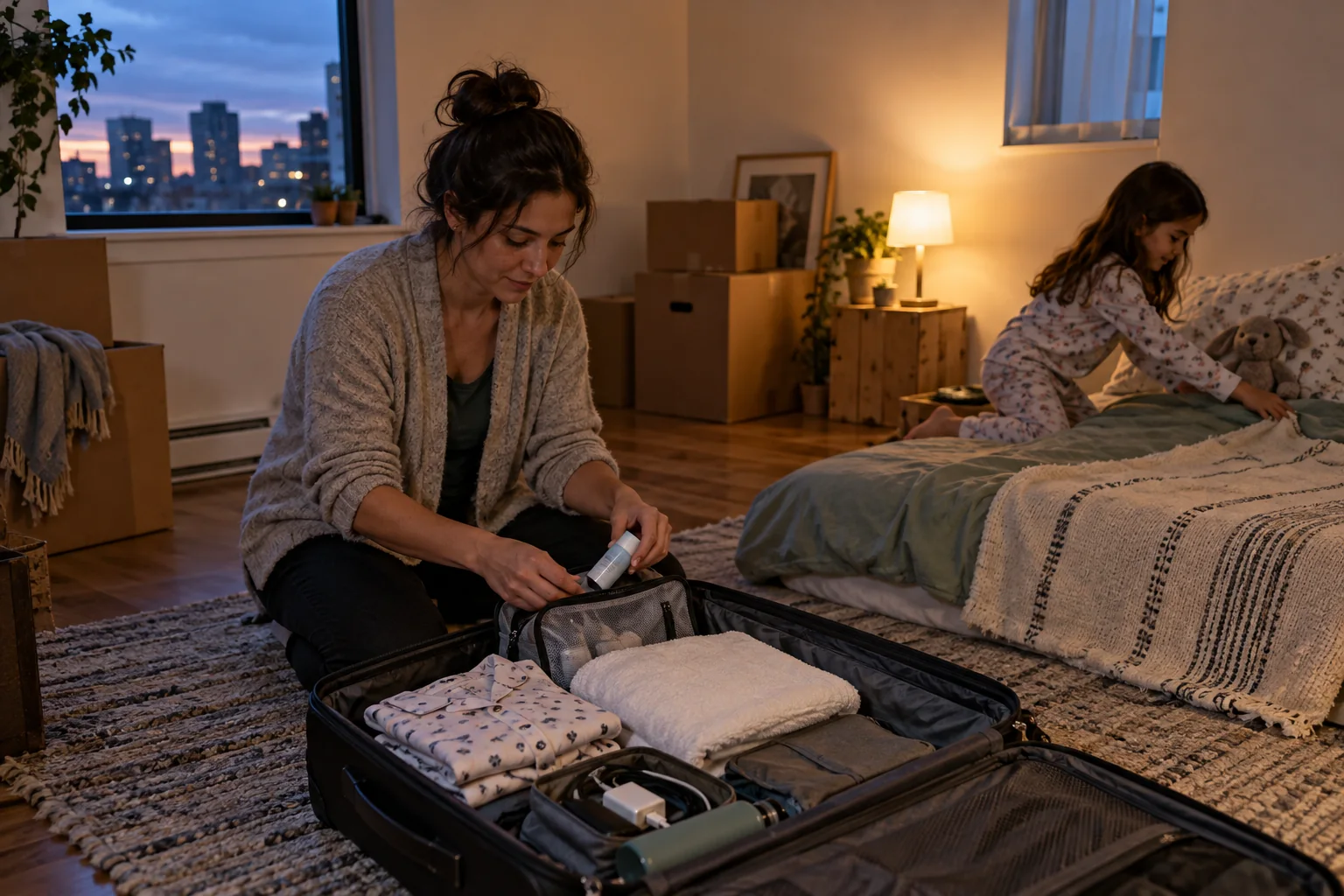
The first evening in a new home often begins with a search. Someone needs a phone charger, a clean towel, medication, or the sheets that were packed in an unlabeled box. A first-night kit solves a narrow problem: it keeps the things your household will use before unpacking within reach. It does not need to contain everything useful in the new home. It needs to cover the first arrival, a night of sleep, and the next morning.
Start with the people and animals who will be there. A household with an infant has a different minimum set from one with a dog, a mobility device, or two adults who will arrive after midnight. Then ask where each item will travel. Some belongings should stay with a person, some can ride in the car, and a few bulky things may go in a clearly identified box on the moving truck. That distinction matters more than the appearance of the containers.
Work backward from your arrival
Picture the first hour at the new address. You may need a key or access code before you can enter. There may be no working light in the entry, no stocked bathroom, and no clear place to set a bag. The truck may arrive after you, or you may get there after the crew. Write down the actions that must happen in order: enter, turn on enough light, use the bathroom, drink water, charge a phone, make a sleeping place, and get ready the next morning. Adapt that sequence to your household.
Use a realistic arrival time. A daytime move with a local truck gives you a chance to buy a forgotten item. A late arrival after a long drive leaves fewer options. If your plans depend on a store being open or a delivery arriving, make a backup. The first-night kit should work if the truck is delayed, a box is misrouted, or you decide to stop unpacking because everyone is tired.
Do not estimate needs only for the person who packed. Ask each adult what they use at bedtime and on waking. Include the less visible items: glasses case, hearing aid supplies, contact-lens case, menstrual products, a sleep aid prescribed for someone, or the charger for a medical device. Make a separate list for children and pets. Individual needs are easier to remember while the old home is still set up.
Divide the kit by how securely it must travel
Create three groups. The first is a personal carry bag that stays with you. It holds critical documents, keys, wallet, daily medication, essential assistive items, a phone, and a charger. Keep it in your control throughout the move. The second group is a car or travel bag with the clothing, toiletries, snacks, water, and sleep items you can manage without the truck. The third is a large first-night box for low-risk bulky goods such as towels, basic bedding, toilet paper, and a small cleaning kit.
This split prevents one missing carton from taking away everything needed for the night. If you do not have a car, use a carry bag and a small suitcase that you can keep with you or take on your travel route. If you are using public transportation or flying, check the carrier's baggage rules before choosing the container. The practical limit is what you can transport reliably, not how many things fit on a checklist.
Label the bulky box in a way the crew and household can recognize: a plain “open first” note plus the destination room is enough. Put the same note on more than one side. Avoid writing that it contains medicine, documents, or expensive electronics. Keep those items with you. Tell the crew lead where the box should go at delivery, but assume you may need to find it yourself. A photograph of the box and its markings can help if several similar cartons arrive together.
Protect the things that cannot wait
Medication deserves its own pass before the old home is emptied. Count enough for the moving day, the first night, and a possible delay, according to the person's usual instructions. Carry it where the person responsible for it can reach it. Keep packaging or labeling that helps identify the medicine and dose. If storage temperature or security is an issue, follow the pharmacist's or manufacturer's guidance rather than a general moving tip. The same applies to medical supplies and equipment.
Keep IDs, lease or closing information, move paperwork, insurance details, and the new address available offline or on paper. You may need to identify yourself at a building desk or answer a question from the crew when mobile service is poor. Save the moving company's official phone number and your destination contact. A screenshot of an access code is useful only if the phone still has power, so pair it with a written backup stored securely.
Glasses, hearing devices, mobility aids, and other daily necessities should travel with the person who uses them whenever practical. Before leaving, check that charging cords, cases, batteries, or other small components are in the same bag. An item can be physically present but unusable because its accessory went in a different carton.
Make sleep possible without a full bedroom
The first-night sleep plan begins with the actual furniture available. Will the beds be assembled on arrival? Are mattresses traveling with the truck? Will someone sleep in a hotel if delivery runs late? Pack for that plan and its likely failure. A fitted sheet without the right mattress, or a pillowcase without a pillow, does little good. Put complete sets together for each person: the needed sheet, pillow and case, blanket, and sleep clothes.
If the mattress will arrive with the truck, make sure the bedding is outside any box buried deep in the load. If the truck may not arrive that day, the car bag should contain a workable alternative, such as travel sleepwear and whatever bedding is practical for the place you will actually stay. Do not count on sleeping on bare flooring if a household member cannot do so comfortably or safely.
For children, include familiar bedtime items that they use every night, not a random selection of toys. A particular blanket, book, night-light, or stuffed animal may matter more than a large box of playthings. Pack these items after they are used on the last night in the old home, then keep the bag close. Explain where it will be during travel so a child does not believe it disappeared into the truck.
Consider the sleep environment at the destination. Window coverings may be absent; room temperatures and street noise may differ. If a fan, white-noise device, or lamp is essential to someone's sleep, include the device and its power cord. Check that the intended outlet and plug are accessible. A small flashlight is useful while locating the main lights, especially when arriving after dark.
Set up one usable bathroom
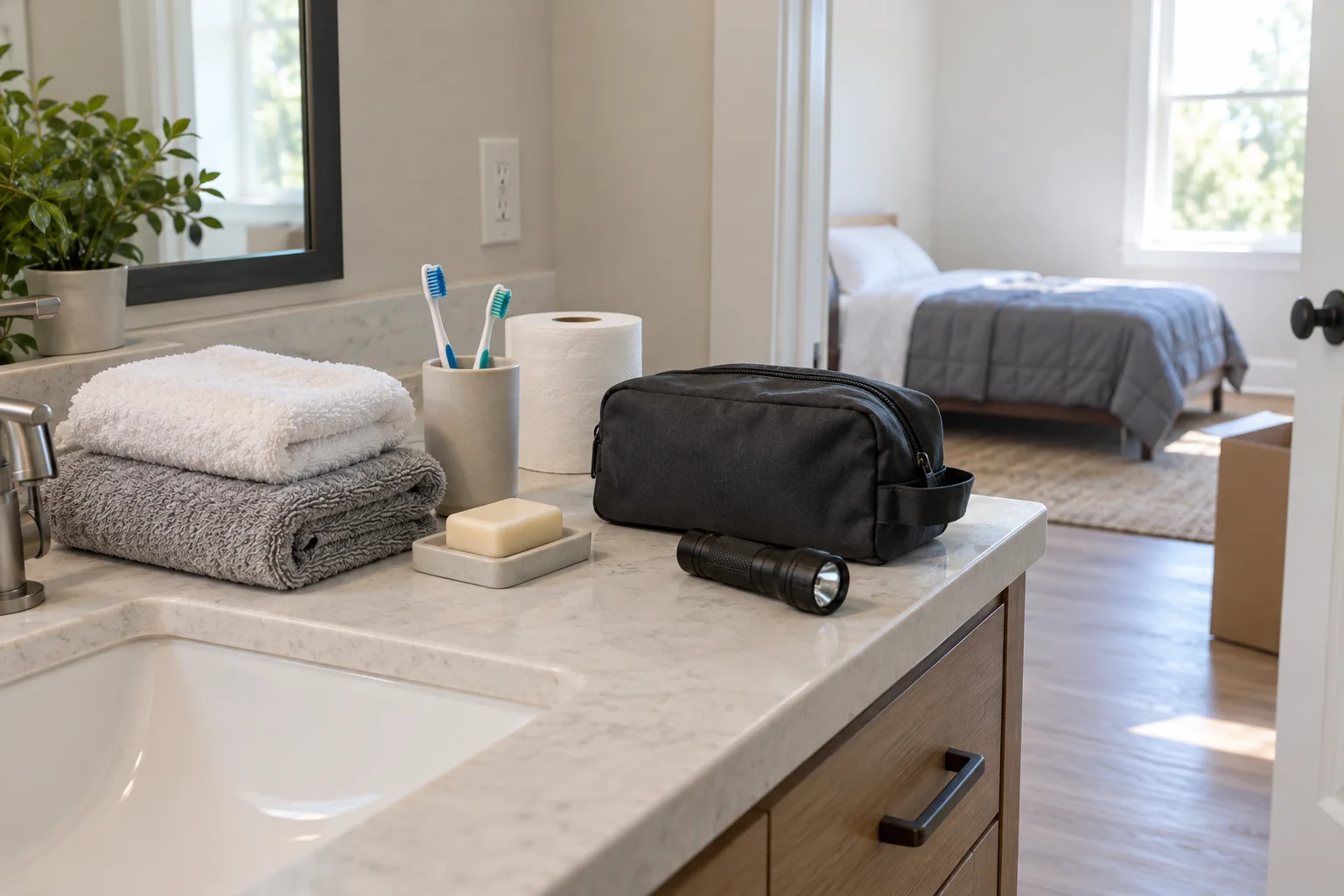
A home can wait for most unpacking, but the bathroom needs supplies immediately. Keep a roll or two of toilet paper, hand soap, towels, toothbrushes, toothpaste, and the hygiene products your household actually uses. If the bathroom is dusty from moving, include a few wipes or a cloth and a small bag for trash. Do not bury these in a kitchen carton simply because that carton had room.
Separate liquids in a leak-resistant pouch or bag and close their caps. A spilled bottle can ruin clothing or paperwork during travel. Travel-size containers are convenient, but they are not required; use them only when they fit the household's needs. Check that everyone has the correct personal item. Similar-looking toothbrushes, contact-lens supplies, or skin products are easy to mix up when packing in a hurry.
If the new home has multiple bathrooms, set up one first. That gives everyone a known place to find the basics. Other bathrooms can be stocked as unpacking progresses. For an accessible bathroom, verify that the items and needed equipment can be reached and used before the person relies on that room for the night. Access matters as much as having the supplies somewhere in the house.
Choose food and water that fit the evening
The food plan should be simple enough to use when counters are occupied by boxes and cookware is unavailable. Pack drinking water and familiar shelf-stable food for the travel period and first evening, along with any utensils, napkins, and opener the food requires. A sealed snack is not useful to someone who cannot eat it because of an allergy or dietary restriction. Ask the household what they will actually eat after a long day.
If you intend to order food, save a fallback. Delivery hours, the correct address, and building access may be uncertain on the first evening. If you plan to cook, verify that utilities are active, the refrigerator is working if needed, and the pan, utensil, and dish will be accessible. Otherwise, do not make cooking part of the minimum plan.
Infant feeding needs a separate check. Pack the food, formula, clean bottles, and preparation or cleaning supplies needed for the travel period and overnight, following the child's usual routine and product directions. For pets, carry their usual food, a bowl, water, medication if applicable, and waste supplies. Sudden changes in food or feeding routines can add stress to an already unfamiliar day. The goal is familiar care, not a new system devised during the move.
If the household will use a hotel because the home is not ready, take the food bag inside rather than leaving it in a vehicle where temperature or access may be a problem. Decide before departure which person carries it at each stop.
Keep power and communication together
Charge phones and power banks before the final packing day. Put the correct charging cable and wall plug in the same bag as the device, or use a clearly marked pouch for the household's chargers. Check the plug rather than assuming all devices use the same connector. A cable without a working adapter may be useless at the new home.
Save essential phone numbers and directions in a form you can reach without mobile data. This may be a note stored locally on the phone, a printed sheet, or both. Include the mover's office, the person receiving the goods, building management if relevant, and anyone who may need to know about a delay. Keep the new address in a format that can be copied accurately into a navigation app or delivery order.
At arrival, choose one outlet for charging and keep it clear of boxes. In a household with several people, assign one place for the charger pouch. This avoids scattering cords through partially unpacked rooms. If power is unavailable, a charged power bank or vehicle charger may cover a short period. For a longer outage, use the household's usual emergency plan. FEMA's Ready emergency supply list includes charging options, flashlights, medications, and family-specific supplies; a moving kit can borrow those practical ideas without trying to replace an emergency kit.
Prepare an arrival pouch for access and handoff
Keys and codes need to be in the correct hands. Verify the physical keys before the old address is empty. If the new address uses a lockbox, electronic code, building desk, or parking permit, record the instructions and hours. A code in an email thread can be hard to find while a truck waits outside. Keep a written or offline copy of the access instructions in the personal bag.
If someone else will receive the truck, give that person the address, expected window, and the provider's official contact. Clarify whether they can sign delivery paperwork, note missing or damaged items, or authorize changes. Do not leave them to guess about your agreement. Keep the shipment inventory and relevant paperwork where the receiving person can use them at delivery.
At the new home, place the first-night box in a room or corner that will remain accessible as furniture arrives. Point it out to anyone unloading. A box placed in a doorway may be moved repeatedly and lost in the pile. If delivery is split across vehicles or days, make sure the essentials box is in the shipment arriving first, or carry its contents yourself.
Build a personal set for each person
A shared box can hold soap and paper goods, but clothing and daily needs are personal. Give each person a small bag for one change of clothes, sleepwear, underwear, and the items used before bed and after waking. For a child, include a spare outfit appropriate to likely spills or weather. For an adult going directly to work the next morning, add the clothes, shoes, and access badge needed for that day.
Think about the route as well as the destination. A long drive may call for snacks, an extra layer, or a change of clothes before arrival. A pet may need a leash and waste bags at stops. Keep those in a place you can reach without opening a full suitcase on a curb. A designated bag helps; a complicated color-coded system usually does not.
Ask each person to check their bag before it closes. That small review catches omissions that one packer may never notice. Then store the bag somewhere it cannot be mistaken for a moving carton. If the household travels in two vehicles, decide which vehicle carries each person's bag and what happens if the vehicles arrive at different times.
Pack a small opening-and-cleaning set
The first evening often requires opening boxes or wiping a surface before use. Pack a safe box-opening tool, a few trash bags, a cloth or wipes, and basic hand-cleaning supplies. Keep sharp tools covered and away from children. You do not need a complete household cleaning cabinet in the first-night box. Bring only what will make a bathroom, sink, or sleeping area usable.
Include basic supplies for a minor mess. A leaking toiletry bottle or dusty shelf should not force a search through twenty cartons. Keep cleaning liquids closed and separate from food and medicine. If the new home needs significant cleaning before anyone can sleep there, make a separate cleaning plan rather than expecting a few wipes to solve it after dark.
A pen and a small notepad can be useful for recording an unresolved delivery question or a room assignment. Do not rely on writing notes directly on cardboard if the boxes will be reused or recycled. Keep the moving documents separate from trash and packing material so they do not get discarded during the first rush of unpacking.
Check the kit before the old home is empty
Pack the first-night containers late enough that daily items are not trapped for days, but early enough to review them calmly. A good time is after the final use of the bedroom and bathroom on the last night, with a written list started earlier. Lay the items out by purpose, then test the list against the arrival sequence: entry, light, toilet, water, food, medication, sleep, and next morning.
Check for missing pairs and components. A lamp needs its cord; a device may need a particular adapter; an infant feeding item may need a cleaning method. Verify that the bag carrying documents and keys has not been put with the truck load. Put medicines and temperature-sensitive items where their handling requirements can be met. Take a photograph of the contents of the large box if it helps the household remember what is there.
Tell everyone which bag is theirs and where the shared supplies will go on arrival. The plan should fit in a few plain sentences. If it takes an elaborate spreadsheet to find a towel, simplify it. The first-night system succeeds when someone other than the person who packed it can use it.
Unload for the night you have, then stop
Once you arrive, inspect access and confirm the essentials are present before opening general cartons. Put the bathroom supplies in one bathroom, place sleeping sets in their rooms, and establish a charging spot. Set aside trash bags and a safe place for packing materials. These small actions make the home functional even if the rest of the shipment remains boxed.
If the truck arrives later, use the carry bags first. When the shipment comes in, compare it with the inventory and note problems through the provider's delivery process. The separate guide on what to check when household goods arrive covers that handoff. After the first night, use an unpacking order that makes the home usable rather than opening every carton at once.
A first-night kit is deliberately limited. It gives each person a working route through arrival, sleep, and morning while the rest of the home catches up. If the bags are easy to find and contain what the household actually uses, they have done their job.