Moving day and arrival
Unpacking in an order that makes the home usable
A new home can be full of possessions and still be hard to live in. Boxes block a hallway, towels are missing, and the pan needed for dinner is somewhere beneath the winter clothes. Unpacking works better when the first goal is ordinary use of the space. Make a clear route, set up one bathroom, create a place to sleep, and establish basic food and charging stations. Decorative choices can wait until the household can move through the home comfortably.
The right order depends on who lives there. A person who works from home may need a desk and internet before a guest room. A household with a baby may need feeding and changing supplies in a predictable place. Start with the next 24 hours, then the next week. Do not turn the move into a contest to empty every carton as quickly as possible.
Begin with clear routes and exits
Before opening boxes, walk from each entrance to the main rooms, bathrooms, and exits. Move cartons out of door swings, stair landings, and narrow paths. Choose a temporary staging area that does not block a window or exit. The U.S. Fire Administration's home fire escape guidance advises keeping doors and windows unblocked. That is a useful first rule for a room full of moving boxes.
Check what is underfoot. Loose packing paper, tape strips, cords, and small hardware can create a trip hazard, especially in dim light. Put a bag for waste and a container for furniture hardware near the work area. Keep tools covered when they are not in use. If a route needs protection while furniture is moved, follow the building or mover's process, then remove temporary materials when the work is done.
Make sure the route works for every household member. A path that suits one adult may be too narrow for a walker, stroller, or pet crate. Leave enough room to turn at doorways. If a room must remain closed while boxes are sorted, tell everyone where the usable route is. The aim is a home that can function while unpacking continues.
Confirm basic systems before arranging rooms
Check that water, power, heat or cooling as needed, and the main lights work. Locate the bathroom that can be used first. If there is no water or an electrical problem, deal with that before arranging decorative items. Contact the responsible utility, landlord, seller, or qualified service professional through the appropriate process. Do not improvise electrical or gas repairs because a moving schedule is tight.
Test the smoke alarms according to the device instructions and identify the exits. Find the location of the circuit panel, water shutoff, and any building contact information you may need. You do not have to master every system on arrival day, but you should know whom to call if a basic service fails. Note any move-in condition issue using the lease, building, or purchase process that applies.
Check internet only if the household needs it immediately. If service activation is delayed, decide whether mobile service or another temporary arrangement covers essential work or communication. Keep the modem, cables, and provider information in one place. A cable box labeled “office” may not help if it contains every cord in the household.
Open the first-night supplies first
Find the personal bags and the large first-night box before breaking down general cartons. Put medication and necessary assistive items where the people who use them can reach them. Place toilet paper, soap, towels, and toothbrushes in one bathroom. Make a charging spot and put water and simple food where the household can find them. These few actions reduce the pressure to unpack everything tonight.
If the essentials box did not arrive, use the items carried with you and make a short replacement list. Do not assume the missing box is somewhere in the stack without checking the shipment record. Ask the mover about it if it was meant to be delivered. The household can still set up a workable night with a limited set of supplies, but the discrepancy should be documented.
Separate personal bags from empty boxes and trash. A small suitcase can vanish behind similar cartons. Give each person a known place for sleepwear, tomorrow's clothes, keys, and charger. This is especially helpful when several people unpack in different rooms.
Make one bathroom complete
Choose the bathroom most people will use and finish it before opening a second one. Put towels, soap, toilet paper, a trash bag or bin, and necessary personal products within reach. Check that the shower or tub works if the household plans to use it that night. A bathroom that looks finished but lacks a towel is not finished for practical purposes.
Keep medication and medical supplies according to their storage instructions rather than placing them in a humid room by default. A person who needs an accessible setup should test the actual route and reach to fixtures before relying on that bathroom. Ask the household member what arrangement works; do not make assumptions from a floor plan.
Set aside cleaning supplies for a quick wipe of surfaces that need it. Do not start a deep-cleaning project unless the room is unusable without it. A targeted reset of the sink, counter, and floor is often enough to support the first day. Put extra supplies in one clearly identified cabinet or carton so the room does not fill with half-open boxes.
Set up sleep before sorting storage
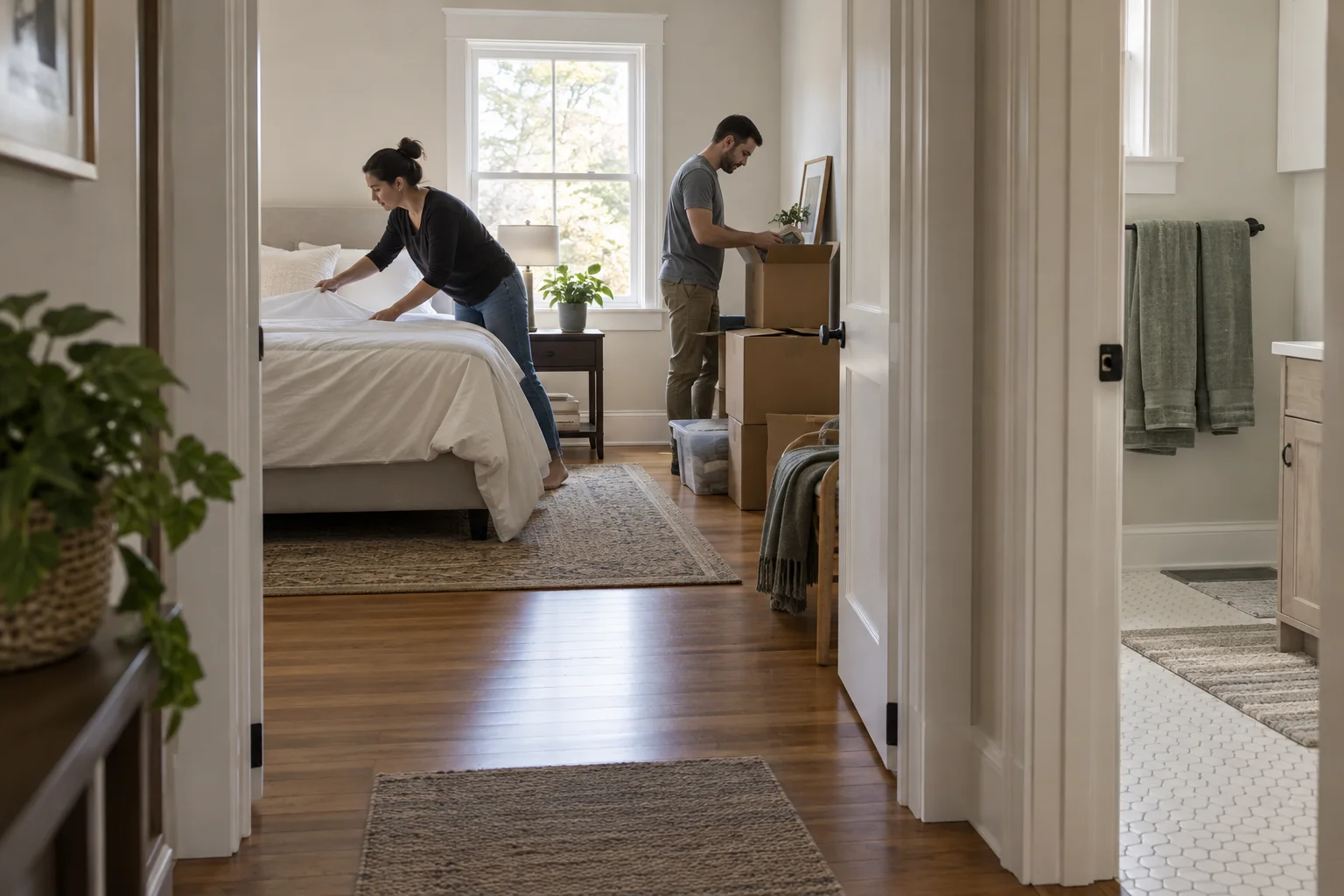
Assemble the beds or prepare the actual sleeping arrangement early. Locate the correct hardware before opening unrelated cartons. Check that the mattress and bedding are present, then make each sleeping place with a sheet, pillow, and blanket. If furniture assembly was part of the mover's service, verify that it was completed before the crew left. Otherwise, follow the manufacturer's instructions and use suitable help for heavy or complex pieces.
Place the bed so doors, windows, and walking paths remain usable. You can adjust its final position later. The first goal is a safe, comfortable place to sleep. Put a lamp or light source and the necessary charger nearby. For children, add the familiar bedtime item carried in the personal bag. Keeping one predictable part of the routine can make the unfamiliar room easier to use.
Do not unpack every closet to find one outfit. Keep tomorrow's clothes in the personal bag until the room is organized. If someone must leave early for work or school, prepare that set before bedtime. A usable bedroom is one where the person can sleep, get up, dress, and leave without searching through stacks.
Give the kitchen a small working area
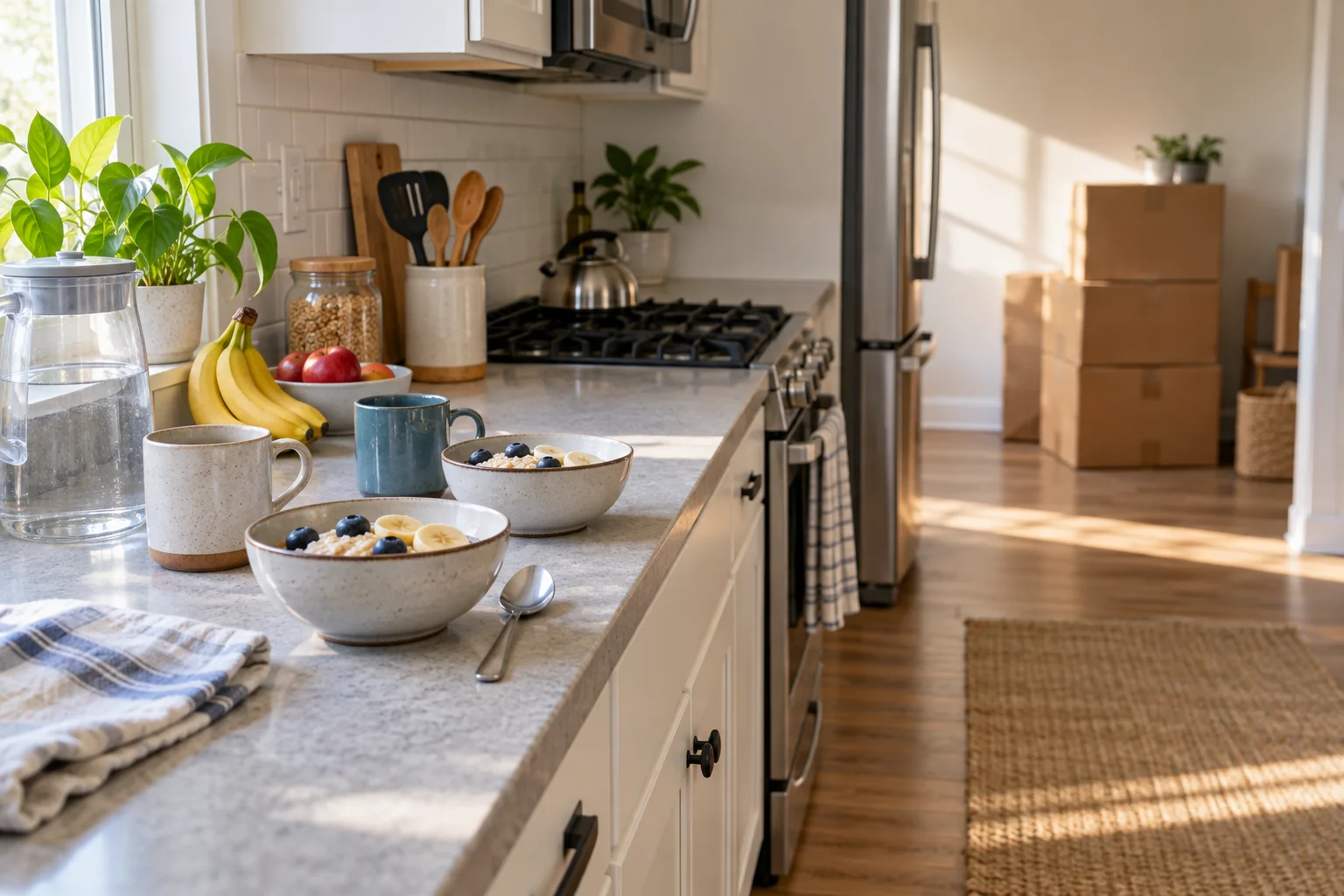
Clear a counter or table surface and clean it as needed. Identify the refrigerator, sink, and a place for food that does not mix with packing debris. Unpack a minimal set: cups, plates or bowls, utensils, one suitable pan if cooking, and the food the household will use first. If cooking is not part of the first-day plan, do not spend the evening opening every kitchen carton.
Check that any appliance you intend to use is connected and working according to its instructions. Do not place boxes against cooking or heating equipment. Keep paper and plastic wrap away from burners and other heat sources. If the kitchen has a gas or electrical problem, stop and contact the appropriate professional or property contact.
Make a food plan for the next day, not the next month. Open the carton with breakfast supplies and any lunch containers needed for work or school. Set aside a place for recycling or trash generated by unpacking. A kitchen becomes more useful when there is one clean surface and an obvious spot for the daily items, even if the cabinets are not yet arranged perfectly.
Triage each room by next use
After the basics, walk through the rooms and ask what each must support this week. A work area may need a desk, chair, power, and internet. A child's room may need clothing and school materials. A laundry area may need detergent and access to the machines. Write a short list of tasks that unlock use of each room; avoid a vague goal such as “finish the whole house.”
Open cartons that serve those tasks. Leave seasonal decorations, archives, and rarely used kitchen tools sealed for now. This does not mean those items are unimportant. It means they do not solve the immediate problem of living in the space. Keep a record of unopened cartons by room so they do not become forgotten furniture.
Some rooms can serve as temporary staging areas. Choose them deliberately and keep a path through them. Do not fill a room with boxes that must later be moved twice to reach a closet or vent. If the move includes storage, decide which items truly belong in storage rather than sending them there simply because the first week feels crowded.
Handle furniture and hardware as matched sets
When a piece has been taken apart, keep its hardware with its identity. A bag of bolts is difficult to place if it is mixed with bags from three other beds. Match parts to the correct frame, table, or shelf before assembly. If a piece is missing, check the inventory and delivery notes and record the gap. Do not force a substitute fastener into furniture that may become unstable.
Measure the intended space if the item is large. A piece that barely fits through a doorway may leave too little room to use the room safely. Place heavy furniture with appropriate help; do not turn a simple unpacking goal into an unsafe solo lift. If a wall anchor is required for a product, follow its instructions and building rules before using the furniture as intended.
Keep the assembly instructions or a photo of the completed item until it is stable and functional. Once assembled, collect spare parts in a labeled container. A loose screw found days later is easier to identify when each set has a home. Avoid putting hardware in a random drawer that will be sorted months from now.
Inspect as you unpack without stopping the whole home
An open carton may reveal a broken item or missing contents. Photograph the item, carton label, and protective material before clearing it away. Add a short entry to the delivery discrepancy record and set the relevant packaging aside. Then return to the room's essential task unless the issue makes it unusable. This keeps an isolated problem from derailing the entire unpacking order.
The household should know where the issue folder is. If one person opens a damaged item while another manages the mover's paperwork, pass along the inventory number and photos before the packaging disappears. Do not make claims from memory that an item was packed in a particular box if no one checked. Describe what is known and what remains uncertain.
If an item arrived intact but lacks a small accessory, check the separately packed parts before labeling it missing. The same object may appear under a different room name on the inventory. A brief search now can prevent an unnecessary claim, but do not let an open discrepancy vanish from the record because you hope the part will eventually appear.
Make a predictable space for children and pets
Children and pets may need a stable area while the household sorts boxes. Choose a room or corner away from the busiest carrying route. Put familiar bedding, water, and age- or species-appropriate supplies there. Check that cords, sharp tools, loose hardware, and cleaning products are out of reach. Do not treat a room full of open cartons as a play area simply because it has floor space.
For a child, unpack the objects that support the next routine: sleepwear, school bag, favorite book, and a place to put tomorrow's clothes. Ask what they need to find without adult help. A simple drawer or visible basket can work until the permanent storage is ready. The purpose is to reduce repeated searches, not to decorate the room in one night.
For a pet, confirm that doors, windows, gates, and screens are secure before giving the animal access to more of the home. Keep food, water, medication, leash, carrier, and waste supplies in known places. Let the animal explore according to its usual needs and the household's supervision plan. If a room is still being used for unpacking, keep packaging and small loose parts away from the pet.
Establish laundry and clothing access
A household can live with unopened books for a week; it usually cannot go long without clean clothes. Locate the laundry machines or the nearest workable alternative. Check whether water and power are available and whether the machines function. Keep detergent, a laundry bag, and any supplies used for the household's normal routine where they can be found. Do not store them under a wall of cartons.
Unpack enough clothing for several days by person and purpose. Work clothes, school uniforms, weather layers, and sleepwear may have different urgency. Place each person's items in a temporary drawer, shelf, or labeled bag. A full closet organization project can wait. If the household has clothing still in suitcases, decide when those cases will be emptied so they do not become permanent floor storage.
When laundry cannot run immediately, make a short plan: how many clean outfits remain, where used clothes will go, and when the first wash can happen. Keep wet or soiled items separate from clean clothing and paper boxes. This is a practical routine question, not a reason to unpack every textile carton at once.
Preserve a place for decisions
Unpacking creates decisions that should not be made in the doorway. Set aside a small table or clear counter for the inventory, pen, room map, and unresolved-item list. Keep keys and important documents out of the packing debris. If two people work in different rooms, use the same list for missing items, furniture parts, and supplies to buy. Otherwise, each person may start a separate pile of notes that is hard to reconcile.
Mark cartons that have been opened but need another action. “Shelf hardware needed” is more useful than leaving the lid half-open. Put donation or disposal decisions in a designated area only after the household has checked the item. A box packed in haste may contain something needed in another room. The decision space helps the household pause without letting uncertain items block the working paths.
Set a pace that preserves access
Work in short passes. Complete one practical function, clear its packaging, then move to the next. Opening ten cartons at once can create a larger search problem than leaving nine closed. Give each open box a decision: put the item in its working place, place it in a deliberate temporary location, or repack it with a reason. An unlabeled pile on the floor is not a decision.
At the end of each day, restore the clear routes, remove loose packing material, and check that the bathroom, beds, and food area remain usable. Make a short list for tomorrow. The list should name the next needed outcome, such as “locate work monitor” or “set up laundry,” rather than every object in the home.
If delivery was incomplete, do not design a room around furniture that has not arrived. The guide on handling a delayed delivery of household goods covers the temporary plan. Keep the area flexible and document what remains due. When it arrives, you can revise placement without undoing every room.
Finish with a household walk-through
After the first essential rooms work, ask each person to walk through their daily routine. Can they enter, use the bathroom, sleep, eat, charge devices, and leave for work or school? Are keys, shoes, and bags in predictable places? Does any box block an exit or an accessible route? Fix the obstacles that affect daily use before choosing artwork or storage bins.
Then make a separate list of remaining tasks: unopened cartons, address changes, borrowed equipment, mover questions, and repairs. The guide on reviewing the move and closing remaining tasks can help with that later stage. A home does not need to look finished to be usable. It needs clear routes, functioning basics, and a sensible place for the things the household uses every day.