Housing and access
Planning a move when a household member has limited mobility
A move is easier to organize when the person whose access matters helps define the plan. Limited mobility can affect how someone enters a building, reaches a bathroom, uses furniture, or travels on move day. It does not tell you what that person can or cannot do. Ask about their priorities and usual arrangements, then plan the move around the actual routes, equipment, support, and timing involved.
The work has several parts: check the old and new properties, decide how the person will travel, keep essential items available, coordinate any support services, and prepare a usable area before the household shipment is unpacked. Do not make medical decisions from a moving checklist. Use the person's clinicians, equipment providers, and other qualified advisers for health or device-specific questions.
The Administration for Community Living describes person-centered planning as organizing supports around a person's goals and preferences. For a household move, the practical version is direct: ask what the person wants to do independently, what help they choose, and what must be in place on the first day. Record those decisions in their own terms.
Start with the person's daily route
Walk through an ordinary day in the current home. How does the person get from the entrance to a resting place, bathroom, kitchen, and other important areas? Which routes depend on a handrail, lift, vehicle, helper, or piece of equipment? The point is to identify what the new home must support, not to catalog a diagnosis.
Ask what tasks the person wants to handle during packing and what they would rather delegate. A person may be able to make detailed packing decisions while needing help with heavy items, or may prefer to supervise a different part of the move. Do not assign a task based only on appearance or an old assumption about their ability.
Note times when access must remain clear. Someone may need a particular chair, bathroom route, or charging area until departure. Mark those as last-use parts of the home. Packing around them can proceed without removing the things that make daily routines possible.
If the person uses scheduled help, record when that support is available. A moving crew, family member, or transport driver should not be treated as a substitute for an established care arrangement unless the person and qualified provider have agreed to a suitable plan.
Inspect the new home in person when possible
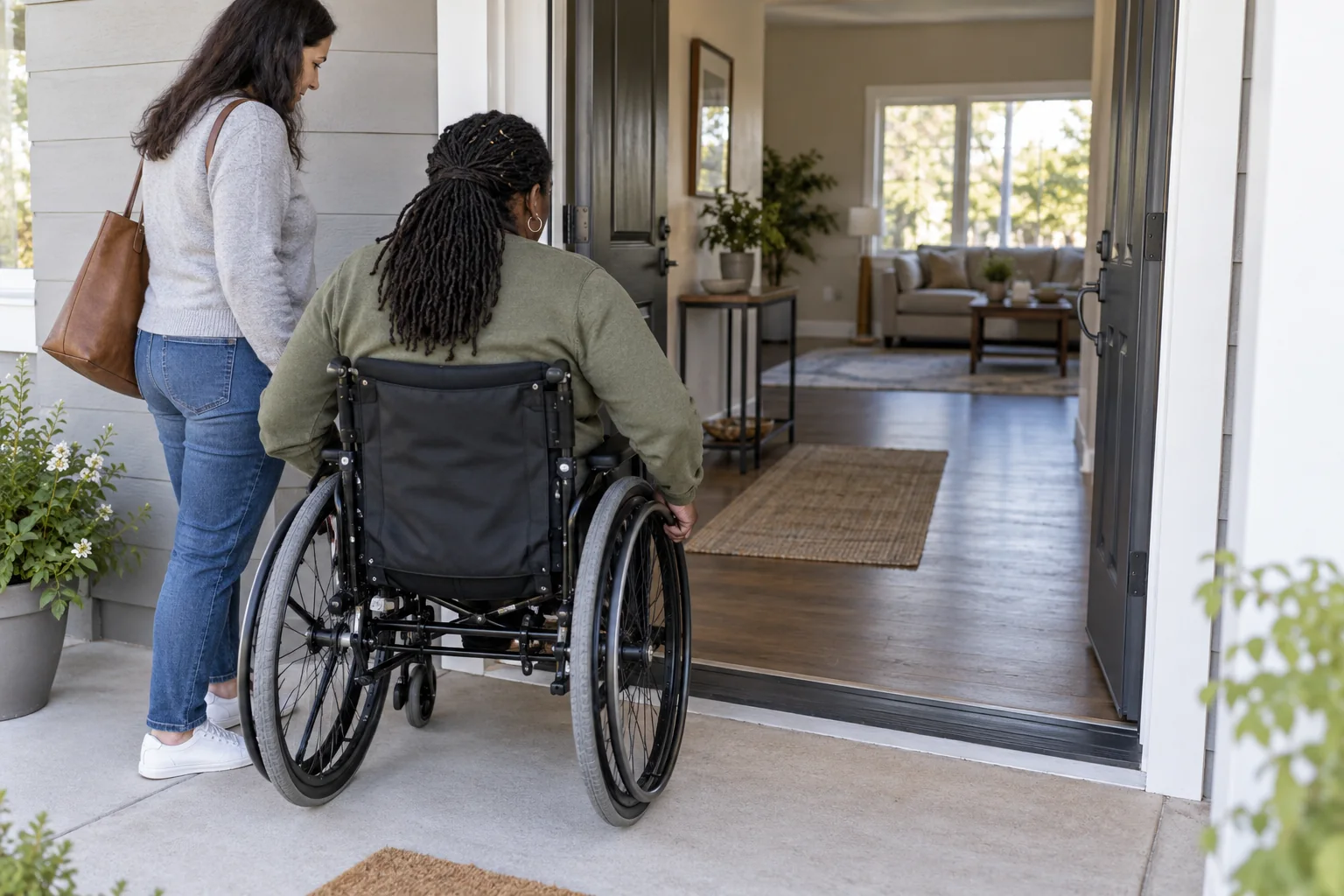
Trace the route from parking or drop-off to the entrance, then through the home to the areas the person will use first. Look at steps, slopes, door thresholds, elevator access, hallway turns, bathroom layout, and space around furniture. Ask the person to assess the route using their own needs and equipment.
Measure clear openings and turning areas rather than relying on a property's general description. A doorway measurement alone may not show whether a mobility device can turn immediately after entering. The guide how to measure doorways and furniture before moving day provides a method for recording the full path. Use those measurements as planning information, not a substitute for an individualized access assessment.
Check the actual entrance that will be available on move day. A service door or loading route may not be usable by the person. Building rules and construction can change the path. Confirm elevator hours, parking, and who controls any locked access point.
If you cannot visit the new home, request measurements, photos, or a video walk-through from an authorized person, and mark what remains uncertain. Do not promise that a setup will work based solely on an advertisement. Plan an early in-person check before placing furniture where it is hard to move again.
Decide what must work on the first day
Make a short first-day list with the person. It may include entry, a usable bathroom, a suitable place to rest, meals, communication, and access to equipment. The specific list is individual. Record which physical items and services each task depends on.
For example, a bed might be delivered but unusable until the correct frame or support is assembled. A powered device might arrive without its charger. A bathroom might be reachable only if boxes are kept out of the hallway. These are logistics failures that can be prevented with box codes, room placement, and a clear unloading order.
Give first-day items a separate route. Some should travel with the person, some in a clearly marked priority box, and some in the moving load with a planned early unload. Do not label every carton urgent. Identify the few items whose absence would stop the first-day setup.
Ask who will verify the new space before the person arrives. That person can check routes, power where relevant, furniture placement, and the availability of supplies. If a problem appears, they should have a contact and a way to change the arrival sequence.
Record access details that are easy to miss
Look beyond the main doorway. A person may be able to enter the new home but find that a bathroom door, bedroom turn, or kitchen work area does not support the way they use the space. Make a list of daily destinations and check each one from the actual entry point. Include where bags and furniture will be placed during the first hours, because temporary piles can close an otherwise clear route.
Test the travel path at the time of day the move will occur if lighting or building access changes. Find out whether a key fob opens the needed entrance, whether the elevator stops on the right floor, and whether someone must unlock a gate. Put those details in the move file. An access feature that requires staff assistance should have a named contact and a plan for the staff member being unavailable.
Ask the person to prioritize any unresolved issue. A missing bathroom arrangement may require action before arrival, while a storage shelf can wait. This prevents the household from spending its first hours on visible but low-impact unpacking.
Plan transportation as its own task
Decide how the person will travel from the old home to the new one or a temporary stop. Consider vehicle entry, seating, mobility equipment, luggage, travel time, and assistance the person chooses. Confirm accessibility directly with any transport provider; a generic booking may not capture the actual needs.
If a device will travel separately, know who takes responsibility for it, how it is prepared under its instructions, and when it will be available again. Do not put the only mobility aid in the household truck if the person needs it between loading and arrival. Ask the device provider or clinician about specialized preparation rather than improvising disassembly.
Plan stops and arrival times with the person. A trip that looks short on a map may be complicated by traffic, building access, or an elevator reservation. Identify an alternative if the original vehicle becomes unavailable. The backup needs to meet the person's actual access requirements, not simply be another ride.
Keep relevant documents, communication devices, chargers, and necessary personal items with the traveler. Protect private information and follow any health-specific instructions from the appropriate professional. A move folder can carry logistics without exposing medical details to everyone handling furniture.
Keep equipment and supplies accessible
Inventory equipment the person uses daily and decide how each item travels. Record accessories, power supplies, manuals, and contact information for the supplier where relevant. Photograph connections or setup details that will help restore the arrangement. Store these records securely and accessibly.
Do not remove equipment from use earlier than necessary. Give it a last-use label on the household packing plan and a named person responsible for its transfer. If a service provider must disconnect, move, or reinstall an item, schedule that work under its instructions. A moving crew may not be qualified to handle every device.
Pack ordinary accessories in a clearly coded bag or carton rather than scattering them among room boxes. Check chargers, batteries, cables, and small parts against the actual setup. Follow the product's handling and storage guidance. Do not assume that a device will be ready simply because its main component arrived.
Prepare a fallback for a delayed shipment. Ask the person and their qualified providers what alternatives, if any, are appropriate. This article cannot prescribe replacement equipment. Its planning contribution is to recognize that a delay may affect daily function and to assign someone to resolve the issue before move day.
Make communication usable
Choose a planning format the person can review and change. A spreadsheet, printed page, phone note, or spoken check-in may work, depending on preference and access. Do not make the plan available only in a format that is difficult for the person to use. Give them enough time to review important decisions before dates are locked in.
At each provider handoff, confirm how updates will be communicated. A transport driver may call a phone number, while a building manager may send email. Make sure the message will reach the responsible person in a usable way. If another household member acts as a contact, agree on which decisions they can make and which should be brought back to the person moving.
Keep instructions concrete: which entrance, what time, which room, and what equipment. Vague phrases such as “accessible enough” do not tell a mover where to place furniture or a driver where to stop.
Coordinate support without taking over decisions
List helpers and services by task, time, and contact method. A family member who can carry boxes is not necessarily available to assist with personal care, transport, or equipment setup. Keep those roles distinct and confirm each one directly.
Share only the information each helper needs. Movers may need to know that a hallway must remain clear and a chair must unload first. They do not need a person's medical history. A transport provider may need specific access details through its official process. Let the person decide what is shared where possible.
The person should have a way to update the plan. A change in energy, schedule, or preference may affect whether they travel before or after the truck. Build in a check-in before final bookings and another just before loading. Do not frame a change as failure; it is new information for the logistics plan.
If multiple organizations are involved, designate a coordinator who maintains the current schedule. The coordinator should confirm decisions with the person rather than treating the spreadsheet as authority over them. One clear contact reduces duplicate calls and conflicting instructions.
Protect usable routes during packing and loading
Keep the person's essential paths open while rooms are packed. Do not stage cartons in a hallway, bathroom entrance, or beside the vehicle access point if that space is needed. Mark a separate box staging zone for the moving crew and check it during the final week.
On loading day, decide when the person will leave or move to a quiet area. That timing should reflect their preference and the available support. If they remain at home while workers move furniture, tell the crew which route and room must stay clear. Assign a household contact to monitor it.
Do not let protective runners, cords, carts, or loose packing material create new obstacles. The moving team can usually choose a safe staging area when told about the access requirement early. Resolve conflicts before a heavy item reaches the narrow point.
Recheck the route after the old home is emptied. A piece of equipment or personal bag may have been moved during loading. Confirm the person can reach the vehicle and that necessary items are with them before the truck departs.
Prepare temporary lodging if there is a gap
If the household will stay somewhere between homes, inspect or confirm that location too. The accessible path, bathroom, sleeping arrangement, and transport to the location matter for every night of the gap. A property described as accessible may still need a room or entrance that fits the individual's equipment and preferences.
Ask the lodging provider specific questions and keep its answer with the reservation. Confirm how to enter the property, whether the assigned room is the one discussed, and what equipment or services the household must bring. Do not assume a special request is fulfilled until it is confirmed.
Keep daily-use items with the traveler during the gap. Storage or delayed delivery may place them out of reach. Make the temporary bag from the actual length of stay and the person's routine, with an alternative if the stay extends. Avoid a generic checklist that leaves out the one item needed most.
If the new-home date changes, revisit the support schedule as well as lodging. A helper or equipment provider booked for the original day may not be available later. Give those parties timely notice and record the revised plan.
Arrange furniture for use, not appearance
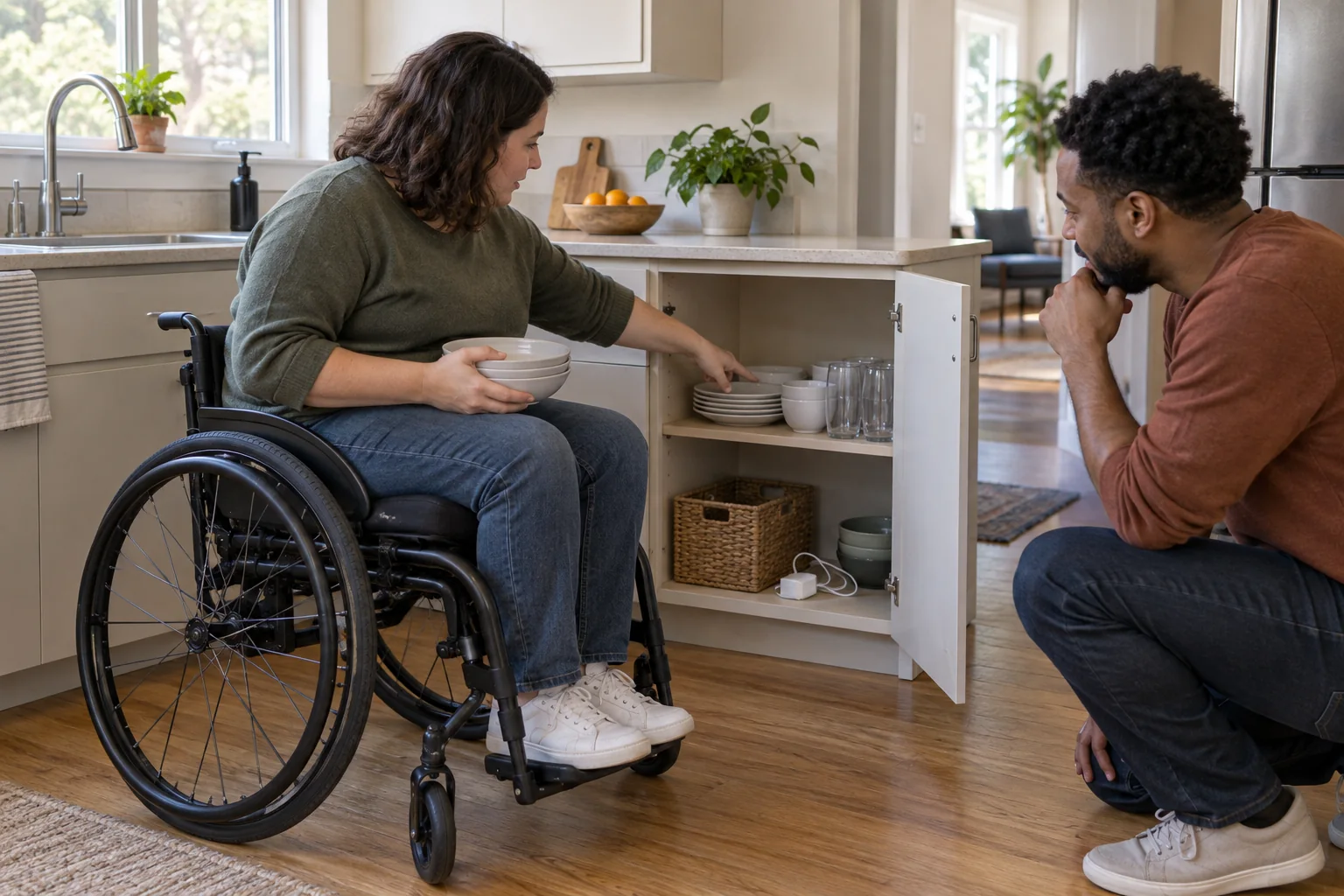
Place large items so the person can enter and use the important rooms. Measure space around a bed, table, or chair before surrounding it with boxes. Ask the person where they want furniture and equipment. The layout that looks tidy to a mover may block a route or make a transfer difficult.
Mark critical placement on a simple room sketch or explain it to the crew lead at unloading. Use clear destination labels. If furniture cannot go in its final position immediately, choose a temporary place that does not block the accessible path. Do not move a heavy piece several times because its destination was left undecided.
Assemble priority furniture under its instructions and verify stability before use. Keep hardware and tools identifiable. If the setup requires a provider or qualified helper, do not substitute a rushed household assembly simply to finish the room that evening.
After the first basic setup, walk the routes with the person. Check what works in practice. A few inches of furniture movement may improve access, but make changes with the person involved and with safe handling of heavy pieces.
Plan for weather and building changes
Rain, snow, heat, or an elevator outage can affect the route and timing. Review the conditions shortly before the move and revise the transportation and unloading plan. How to prepare for a move during bad weather covers household logistics; apply them to the person's actual access route and equipment rather than only to the boxes.
Ask the building contact what happens if the planned elevator or entrance is unavailable. A backup route must be usable by the person, not merely by workers carrying cartons. Confirm any reservation or staff assistance needed for that route.
Keep the transport and support contacts available during travel. If the person arrives before the property can be entered, they need an appropriate place to wait. Plan that possibility in advance rather than expecting a last-minute change to be comfortable or safe.
Do not let the pressure to keep the truck on schedule override an access concern raised by the person. Pause and adjust the route or sequence when new information shows the plan is not workable.
Verify the first-day setup and follow up
Before ending the move day, check the person's own first-day list with them: entry, rest, bathroom, food or water access, communication, and required equipment or support. Note any unfinished item and who will resolve it. A box being somewhere in the house is not enough if it cannot be reached.
Confirm that support providers have the correct new address, entry instructions, and schedule through their appropriate channels. Update account and contact information without putting private details in a public moving document. Keep the old-home and new-home records distinct so no one is sent to the wrong place.
In the following days, ask what parts of the setup work and what needs changing. A route may be clear in an empty home but difficult after deliveries arrive. Adjust storage and furniture placement based on the person's experience. Finish the remaining unpacking only after the essential space is usable.
A good plan makes the move fit the person, not an assumed category. Ask about goals and daily routes, verify each property and vehicle, assign support, and keep essential equipment available. The details will be individual; the method is to make them visible before the move creates pressure to guess.