Housing and access
Planning a move out of an apartment building
Moving out of an apartment building involves more than carrying boxes to a vehicle. The building may control when an elevator can be used, where a truck can stop, how common areas must be protected, and how keys are returned. Those rules can affect the moving schedule as much as the distance to the new home. Learn them before committing to a loading time.
Start with the lease, resident handbook, management portal, or other current instructions for your building. Ask management about anything unclear and keep the answer in writing when it changes your plan. Rules differ among properties, and a neighbor's previous move may not reflect the current procedure. If movers are involved, share the confirmed requirements with them before move day.
This guide is a way to organize the work. It does not state what a particular lease or city requires. The useful output is a short move-out file with reservations, contacts, access details, route measurements, and a final handoff checklist that matches your actual property.
Get the building's move-out procedure
Ask management how residents schedule a move. Find out whether you must reserve a service elevator, notify security, submit a mover's information, or complete a move-out form. Record deadlines for requests and any time windows for loading. If you have an online portal, save the confirmation details outside the portal as well.
Check whether the building needs documents from a moving company. Some properties ask for insurance information or other paperwork before allowing a crew into common areas. Do not assume a provider will have the right document ready without notice. Give the provider the exact building instructions and a deadline that leaves time to correct a missing item.
Ask about fees, deposits, and how they are handled under the building's current policy. Clarify what is refundable, what could be charged for damage, and how any inspection is scheduled. Keep receipts and written confirmations. This is a planning step, not a claim that every building charges a fee or returns one under the same conditions.
Identify the person or office that will answer questions on move day. A general reception number may not reach the staff member who controls the loading area. Record business hours and an alternative contact if the move extends beyond them. Share only the necessary contact information with your mover.
Reserve the elevator and loading time
If an elevator reservation is required, request a slot that covers the actual loading work, not just the estimated truck arrival. Include time to move carts through hallways, wait for a lift, and secure doors under building rules. A short reservation can force the crew to stop before the apartment is empty.
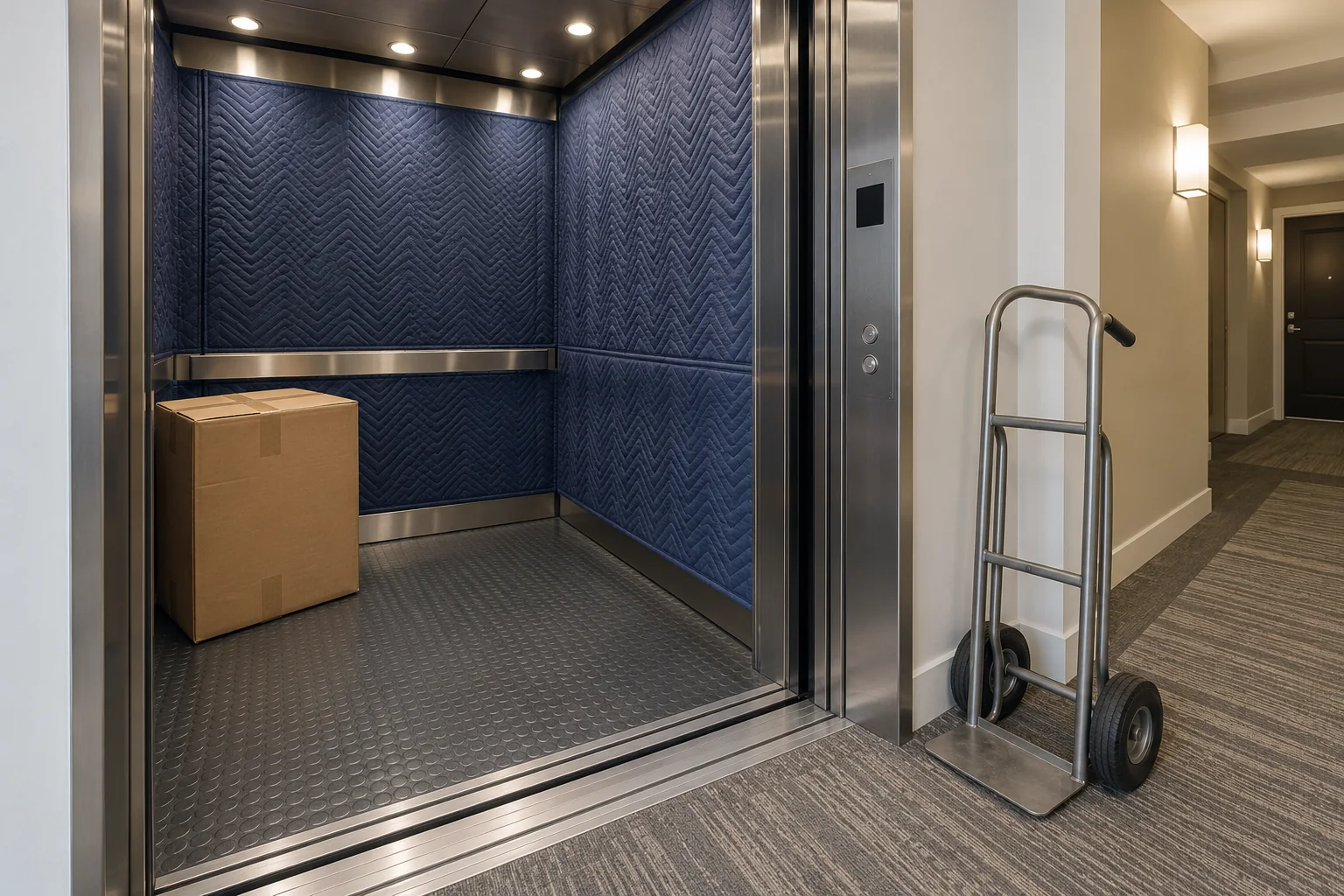
Confirm the reservation in writing. Note the date, start and end time, elevator location, and any check-in procedure. Ask whether the building installs protective padding or expects the mover to provide it. Do not arrive assuming the elevator will be prepared automatically unless the confirmation says so.
Ask whether another move or delivery is scheduled nearby. The building may coordinate shared loading space or elevators. A conflict discovered early can be handled by changing a reservation or arranging a different sequence. A conflict discovered when a truck is parked can consume the entire schedule.
If you cannot secure the preferred slot, revise the plan before promising a time to the mover. The carrier's availability and the building's access window must overlap. Put both confirmations in the same move file so everyone works from one schedule.
Check the path from apartment to truck
Walk the full route with a tape measure and notes. Include apartment doorways, turns, hallways, elevator doors, elevator interior, lobby doors, ramps, and the loading area. Look for narrow spots and fixtures that reduce the usable opening. A sofa that leaves the apartment may still fail to turn into the elevator.
Measure bulky furniture, including arms, legs, handles, or protective coverings that change its dimensions. Do not assume a single width comparison proves an item will fit. Turning space and orientation matter. If clearance is close, ask an experienced mover or suitable professional to assess the route rather than forcing an item through it.
The guide how to measure doorways and furniture before moving day can help you organize dimensions and route notes. Give the results to the moving provider before the crew arrives, especially for unusually large pieces. A new route discovered on move day may be unavailable or may require a different service.
Make a short route sketch for the mover, with the apartment number, service elevator, lobby exit, and approved loading point. A sketch is especially useful in a building with several towers or similar entrances. Confirm the route by walking it, because an online floor plan may omit a locked door or change in level. If the normal route is inaccessible on move day, ask management for an approved alternative before the crew begins carrying items. Do not choose a shortcut through a resident-only space or fire exit simply because it looks shorter. Note any point where a door needs a fob or a staff member. Assign someone to manage that access so the crew is not repeatedly stopped with furniture in hand.
Check the route in the new property too. An item that fits out of the old building must also fit into its destination. Include exterior steps, the new building's elevator, and the intended room. If the final path is uncertain, resolve it before deciding whether to transport the item at all.
Plan the loading area and vehicle access
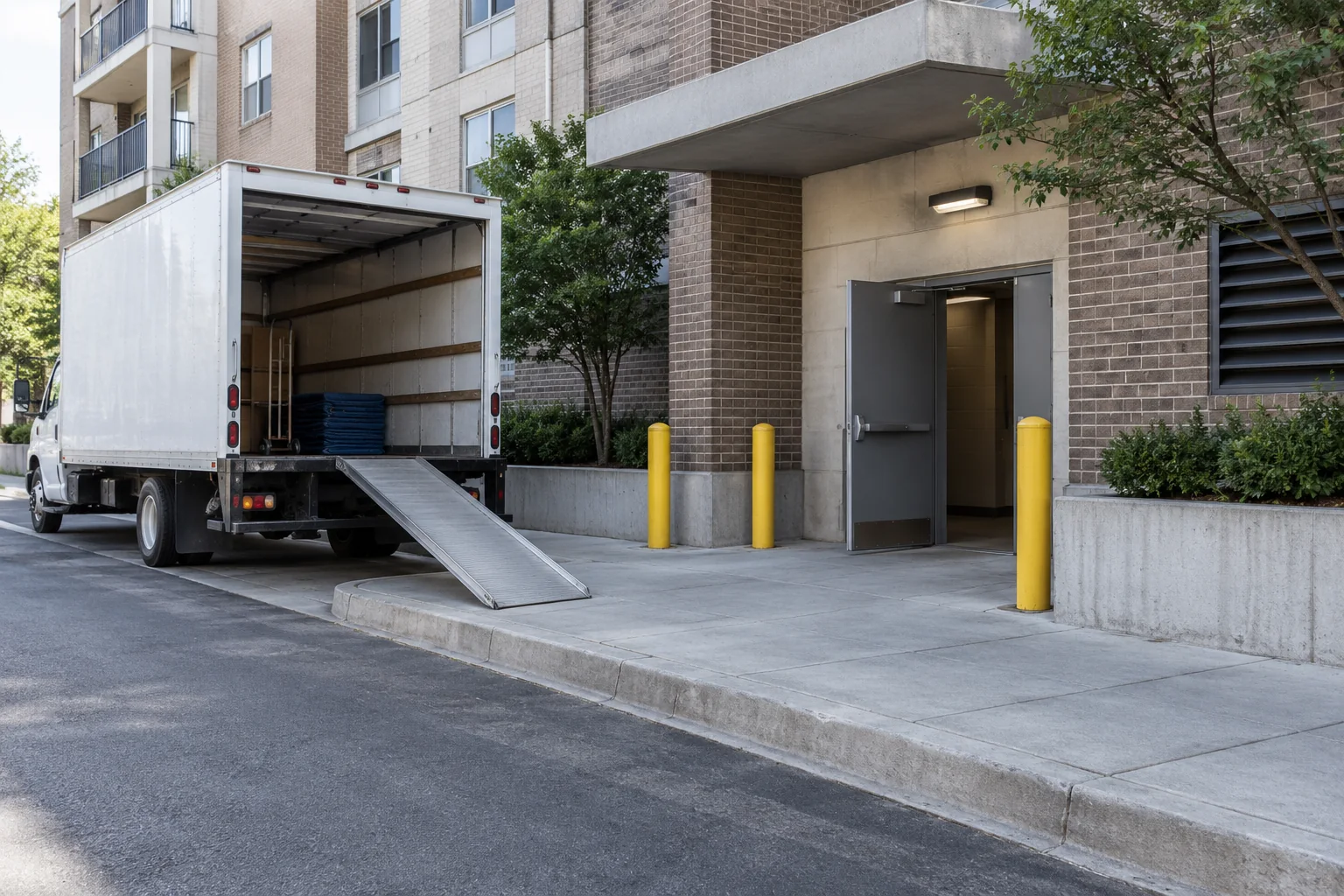
Ask where the moving vehicle may legally and practically stop under building instructions and local rules. A loading dock, designated curb space, or nearby parking area may be available. Confirm vehicle size limits, clearance, and any reservation or permit process with the responsible source. Do not assume a space shown during a weekend visit will be open on move day.
Tell the mover the location, entrance, clearance, and approximate carrying distance. If the vehicle must park far from the elevator, the crew may need more time or equipment. The provider can assess its own requirements when it has accurate information. A vague note such as “street parking” is often insufficient.
Walk the route between building and vehicle. Note steps, ramps, doors, and surfaces that may be slippery in poor weather. Check whether carts are permitted and where they may be staged. Keep fire exits, accessible routes, and ordinary resident access clear according to building rules.
If the loading area is shared, plan how the vehicle will arrive and depart within the reserved window. A driver may need a contact person to open a gate or direct them to the correct entrance. Share the relevant instructions in advance and be available when the crew reaches the property.
Coordinate with management and the mover
Send the mover a concise building sheet. Include the confirmed elevator window, check-in location, vehicle access, route constraints, required documents, protection rules, and on-site contact. Ask the provider to acknowledge anything that affects its service or timing. Keep a copy for yourself and update it if management changes a detail.
Tell building management the information it actually needs about the move. Follow its submission method rather than sending personal details through an informal channel. Record any approval or instructions it gives you. If a rule seems to conflict with the moving provider's plan, resolve it with both parties before loading begins.
Assign one household member to handle building questions on move day. The crew should not have to stop carrying a heavy item while several residents give different directions. The contact person can check in with staff, confirm the elevator, and call the mover if access changes.
Keep an alternative plan for a delayed arrival or unavailable elevator. The details depend on the building and provider; you may need to move the slot, pause loading, or reschedule. Ask in advance what happens if your reservation cannot be used. Knowing the process is more useful than assuming the day will run exactly to the original times.
Protect shared areas as required
Find out what the building expects for elevator walls, floors, corners, door frames, and hallways. Some properties provide materials; others require the mover to use approved protection. Follow the written procedure. Do not tape materials to surfaces without permission if the adhesive could damage paint or finishes.
Before loading, note any visible preexisting damage along the route if the building's process allows or requires it. Use photos or an inspection form where appropriate. If management provides a walk-through, attend and keep the record. The aim is an accurate account of the condition before and after the move.
Keep carts and cartons inside permitted staging areas. A pile in a corridor may obstruct residents or slow the elevator cycle. Pack boxes so they can be moved in an orderly sequence from apartment to vehicle. If a large item needs special handling, coordinate its passage through common areas rather than leaving it unattended.
After loading, check the route for packing material, debris, or visible damage. Report an issue through the building's required channel and document what happened. Do not assume the crew or management will make the same report for you. Close out any protective materials or borrowed equipment as the building instructs.
Pack for the route and timetable
Boxes going through a shared elevator and lobby should be closed, labeled, and manageable before the reservation begins. The move window is not a good time to sort a half-packed drawer. Make a realistic packing deadline that leaves room for final personal items and cleaning supplies.
Keep a separate carry-with-you group for documents, keys, medication, and other items needed during travel or before the truck is unloaded. Do not put them on a staging cart by accident. Mark the space where those bags will stay, and tell helpers that they are excluded from the moving load.
Group cartons by destination room and priority. If they must travel through a narrow corridor, stage them without blocking the route. Keep the heaviest or awkward pieces accessible to the crew in the order agreed with the mover. The exact loading sequence belongs to the people handling the truck, but clear groups and labels make the work easier.
If the building limits move hours, stop packing tasks that require the service elevator before the window closes. Small last-minute errands should not consume time needed to move furniture. Check the schedule at several points during the day and adjust with the crew if the load is taking longer than planned.
Manage building utilities and address tasks
Moving out of an apartment may involve separate arrangements for electricity, internet, water billing, parking, mail, and building access. Which accounts you control depends on the lease and property. Make a list of services in your name and note the date each should change. Do not cancel a service before you have finished using it for the move or property handoff.
Keep the utility schedule with the move file so it is not lost among packing notes. Confirm account changes through the provider's current process. Record confirmation numbers where relevant. If a service is controlled by the property rather than the resident, ask management what action is expected of you.
The broader sequence is covered in how to organize utilities and address changes during a move. Coordinate those tasks with your actual move-out date, not simply the truck date. The apartment may need power for cleaning or an inspection after the furniture is gone.
Check how building-specific services are closed: storage lockers, package rooms, parking permits, amenity access, and resident apps. These details vary by property. Make a short list and confirm what must be returned or deactivated so a forgotten fob does not become a final-day problem.
Plan the empty-apartment inspection
Read the lease and current move-out instructions for cleaning, repairs, and inspection. Avoid relying on a generic deposit checklist, because the applicable process depends on the property and local law. Ask how an inspection is scheduled and whether you may attend. Keep the response with your move records.
Reserve time after the truck is loaded to clean and check the empty space. An apartment looks different when furniture is gone. Inspect floors, closets, cabinets, appliances, bathroom storage, balcony, and any assigned locker. Remove belongings that are yours, including small hooks or temporary fixtures only as required by the property's instructions.
Document the condition accurately with dated photos or a walk-through record if useful. Capture each room and any issue you want to discuss. Do not stage or alter a photo to make a claim it cannot support. If management uses a form, complete it carefully and keep a copy.
If you identify damage or a disagreement, follow the building's reporting and dispute process. This guide does not determine whether a charge is valid. A written timeline, condition photos, and copies of communications may help you understand and address the issue through the proper channel.
Return keys and close access
Ask which keys, fobs, parking passes, mailbox keys, and access devices must be returned, and to whom. Make a count before move day. If an item is missing, tell management early rather than assuming it will be found during cleaning. Confirm the return method and any deadline in writing.
Do not give up the only apartment access before the last inspection or cleaning task is complete. At the same time, do not retain a device after the property requires its return. Sequence the handoff with the actual lease and management instructions. A final walk-through should include every storage space assigned to you.
Record that keys and devices were returned. A receipt, signed form, or message acknowledging the handoff can prevent uncertainty later. Keep any forwarding contact information current so management can send notices or a final statement through its official process.
After leaving, update the move file with the final dates: truck departure, inspection, key return, and any open follow-up. This separates completed tasks from issues that still need attention. You should be able to answer who holds the keys and whether the apartment handoff is finished without searching through text messages.
Build a move-day sequence
Put the day in order. Confirm the vehicle and crew arrival, building check-in, elevator preparation, start of loading, expected end of the reservation, cleaning period, inspection, and key return. Leave room for uncertainty. A minute-by-minute plan will fail as soon as one elevator trip takes longer than expected.
Give a copy of the relevant parts to each participant. Movers need access and route information. Household members need their packing and carry-with-you assignments. Building staff need whatever notice the property requires. Avoid sharing the entire private household inventory with everyone when a narrower instruction will do.
At the start of the slot, verify the elevator and loading area are actually available. If either is blocked, contact the responsible person before moving heavy furniture into a corridor. Once loading begins, keep communication simple: one household contact, one mover lead, and current building instructions.
When the last item leaves, inspect the apartment, common route, and loading space. Account for moving equipment and protective materials. Then complete cleaning, documentation, and handoff. The move is not finished merely because the truck has departed; the building access and property obligations also need a clear close.
An apartment move runs more smoothly when the building's access rules are treated as part of the transport plan. Reserve the right spaces and times, measure the route, share accurate instructions, and leave a documented handoff. The exact procedures come from your property and providers; the organization makes them workable together.