Budget and hiring
Moving access charges: stairs, long carries and elevators
The route between a home and a moving vehicle can change the work more than the distance between the two addresses suggests. A ground-floor apartment may have a long walk from the only permitted loading space. An upstairs home may have an elevator that is unavailable during the reserved pickup window. Describe the full route at both ends before accepting an estimate, then check how the provider has priced it.
Moving access charges are names for specific work or conditions in a provider's documents. They are not a universal schedule of fees. For interstate household moves, FMCSA describes stair and elevator carry charges in its moving glossary. The terms help you recognize questions to ask. The amount and applicability for your move come from the actual estimate and the relevant tariff or agreement, not from a generic online figure.
Make a simple access record for each address: the permitted loading position, route to the entrance, stairs, elevators, doors and times when they can be used. Share it with the provider preparing the estimate. A clear description early in the process gives both sides a chance to correct assumptions while the schedule can still change.
Walk the route an item will travel
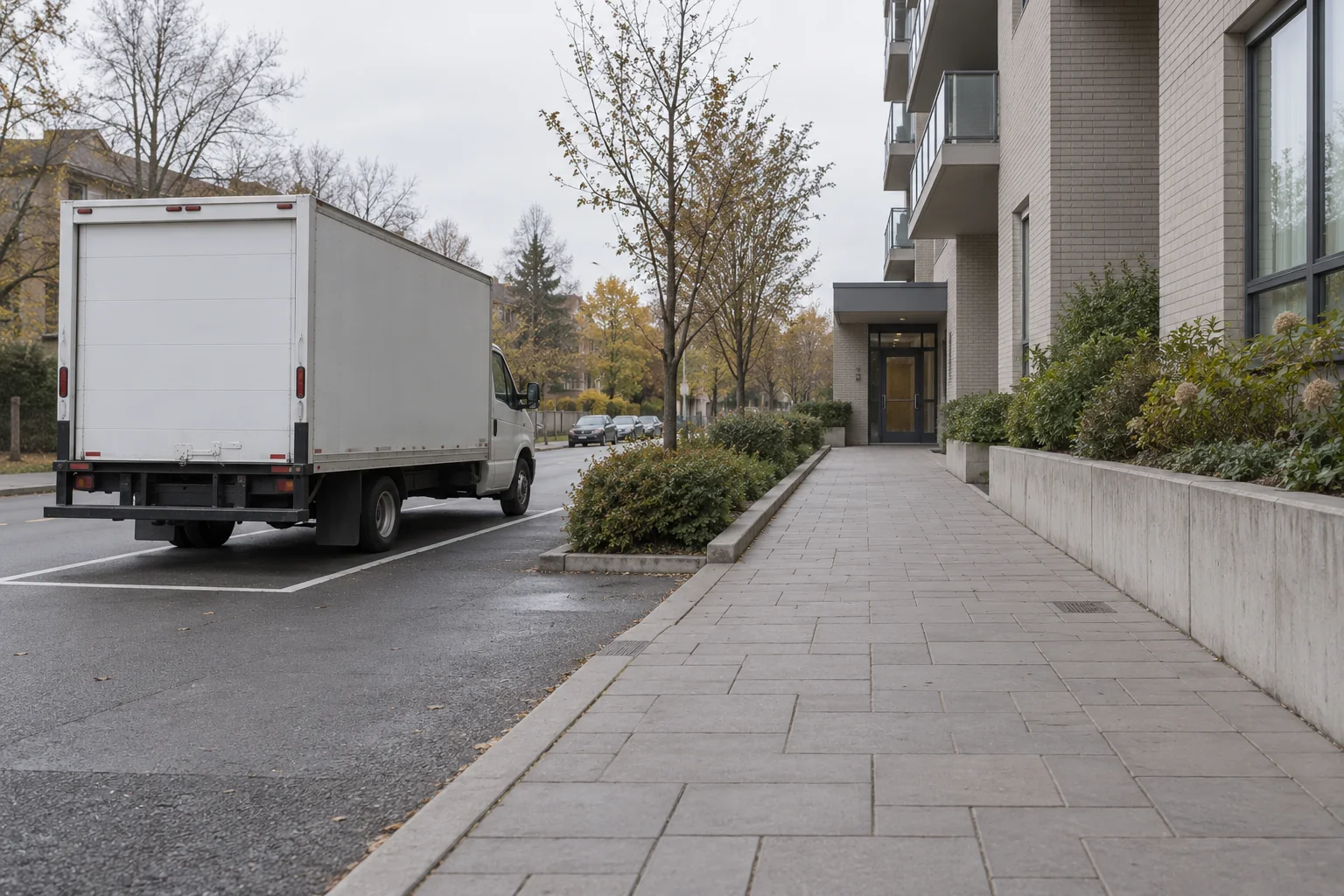
Start at the place where a vehicle is legally allowed to stop. Walk to the entrance the movers will use, then continue to the rooms containing the shipment. Repeat the route at the destination. Include the return trip for equipment and the possibility that one door has a different access rule from another. The nearest visible curb may not be available for loading.
Note physical facts you can check: steps, landings, door width, tight turns, low ceilings and the distance from the permitted vehicle position. If the route passes through a courtyard or garage, describe that. Give the provider a photograph or simple sketch if it helps explain an unusual path, while recognizing that an image cannot show every building rule.
Ask the building manager or owner which entrance can be used and when. A service entrance may have different hours from the main lobby. An elevator may require a reservation or protection pads. A loading dock may need a separate booking. Do not assume a building rule from how ordinary residents enter and leave.
If you have not visited the destination, state that access is provisional. Ask for floor plans, photographs or a live description from someone who can see the route. Mark unresolved facts rather than inventing measurements. Review the estimate again once access is confirmed, especially if the original description assumed a ground-floor or close-loading move.
Describe stairs without relying on floor number
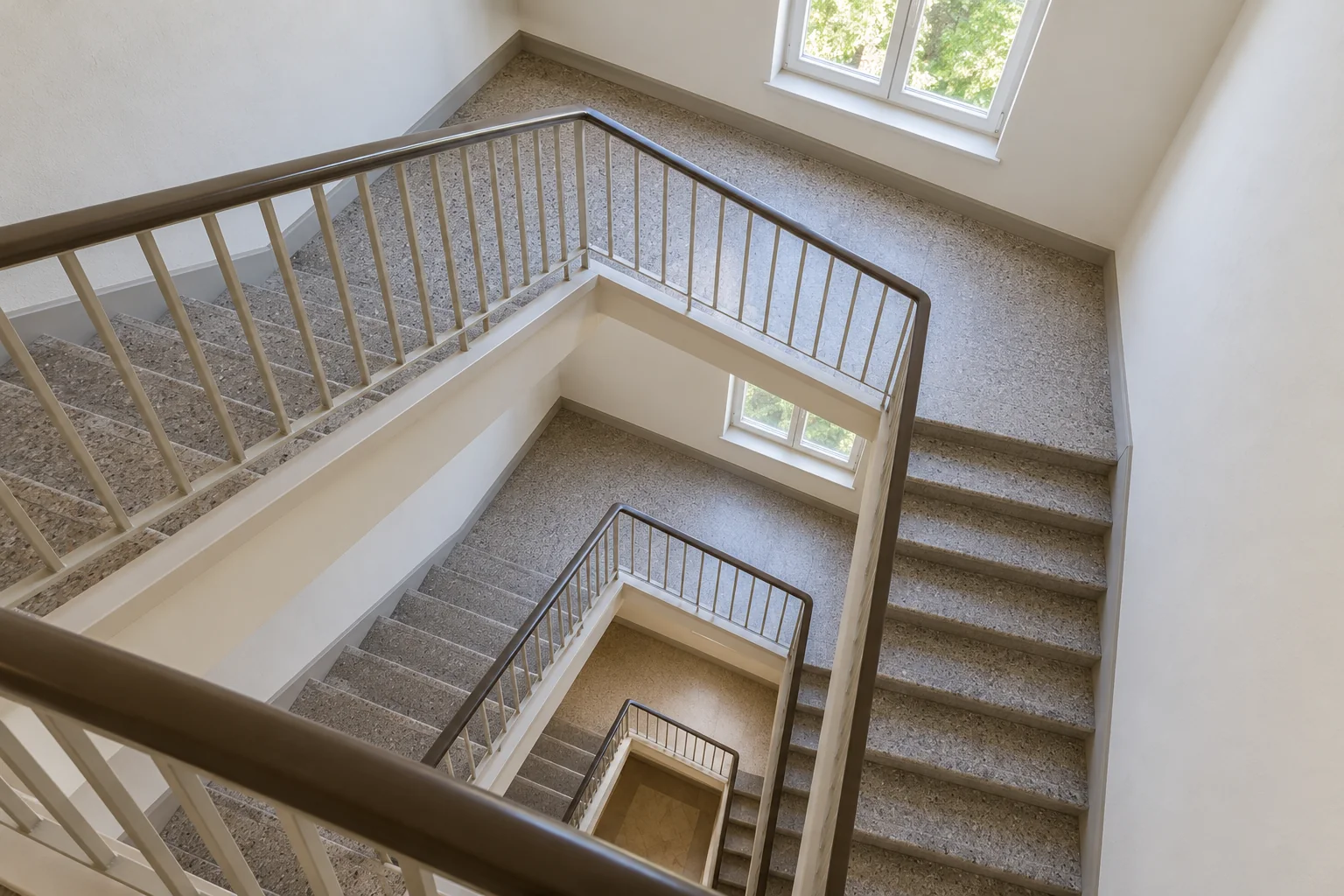
A second-floor apartment can have a different number of steps and landings from another second-floor apartment. Describe the actual path from the entrance to the rooms. Mention stairs between the vehicle and entrance as well as inside the building. Tell the provider about narrow turns or a staircase that limits the size of furniture that can pass.
Ask whether the estimate includes the described stair work and how it is identified. A document may use a line item or include it in a broader service description. Do not assume that a missing line means the work is free. Confirm the priced scope in writing so you know whether a later charge would refer to genuinely new information.
Check large pieces separately. If a sofa or wardrobe cannot use the expected route, the mover needs to know before loading. Measure carefully where appropriate and ask the provider what information it needs. Avoid promising that an item will fit when you have not checked the relevant turns and openings. A different route may require building permission or a different service arrangement.
Stair access also affects timing. The household may need a longer loading window, especially when the route is shared with residents or another move. Ask the provider how the access description affects its schedule. The purpose is to arrange a workable job, not simply to argue over a line item after the crew arrives.
Confirm elevator use as a booking, not an assumption
Find out whether the building has a freight or service elevator and who controls reservations. Ask about its hours, dimensions and any required protection. Record the reservation confirmation and the person to contact if the elevator is unavailable. The existence of an elevator in the building does not establish that it will be available for your move.
Tell the moving provider the exact window. Check whether its pickup or delivery timing fits inside it. If the company offers only a broad arrival window, discuss that conflict before booking. Do not reserve a two-hour elevator slot and assume a crew can perform every part of the move within it without confirming the scope.
Ask how elevator work is treated in the estimate. FMCSA's glossary describes an elevator carry as a charge related to additional labor for using an elevator. That definition does not mean every elevator move receives the same charge. Ask the provider which floors and elevators it has included and how a change would be documented.
Keep a backup plan for a missed reservation. The building might offer another slot, or the move may need a revised date. Find out which alternatives are actually possible and which organization can authorize them. Do not assume a crew can choose stairs when the building prohibits it or when the shipment includes items that cannot use that route.
Identify a long carry from the permitted vehicle position
A long carry concerns the distance over which belongings must be carried between the vehicle and the residence. The meaningful starting point is where the provider can actually place its vehicle, not where a passenger car can stop briefly. Verify parking and loading restrictions with the responsible local authority or property manager as needed.
Describe the surface and route as well as the distance. A paved path, ramp, garage corridor or uneven outdoor approach can affect the method and time required. Ask the provider what details it needs for the estimate. Avoid using your own unverified rule about when a long-carry charge begins; the relevant terms belong in the provider's documents.
If parking is uncertain, state the possible positions. Ask how each would affect the quoted work and whether a permit or reservation can remove the uncertainty. A comparison between providers is more useful when each has priced the same legal loading location. A lower estimate based on a curb that cannot be used is not a better price for the actual job.
Remember the destination. A short walk at pickup does not cancel a long route at delivery. Include both in the access record and check the estimate for both addresses. When the destination is an apartment complex, identify the specific building entrance rather than giving only the property address.
Separate building payments from mover charges
A building may request an elevator deposit, protective materials or a reservation fee. Record who receives that money, when it is due and whether any part is refundable under the building's terms. Keep it separate from the mover's invoice unless the estimate expressly says the provider handles it.
The mover may charge for work associated with access. Ask which service the charge describes and how the amount is determined in the written arrangement. A building deposit and an elevator carry line can both appear in your overall moving budget because they pay for different things. They should not be merged into one unexplained access total.
Check whether a certificate or other building document is required from the provider. Ask the building for its current requirements, then give them to the mover with enough time to respond. Do not assume the provider can produce a document instantly or that the building will accept any generic certificate. Keep the confirmation from both sides.
If a permit is needed for a loading space, identify who obtains it and who pays. Note its date, hours and vehicle restrictions. A permit that applies to a different day or location does not solve the access problem. Confirm the actual approved arrangement before treating an estimate as final.
Compare estimates against the same access description
Send each provider the same verified access notes. Review the resulting documents for pickup and delivery details. If one estimate assumes an elevator and another lists stairs, ask for clarification before ranking their totals. The difference may reflect scope, not efficiency or price.
FMCSA's guidance on unexpected moving costs says written interstate estimates should include transportation and additional service charges. It also discusses changed circumstances such as stairs or elevators. Use the guidance to identify questions about your document, then ask the provider how the described access appears in its current estimate.
Look at both the line items and the service narrative. A charge may be included within a larger total, or a condition may be left unresolved. Ask for the current document to show what was assumed. A verbal statement that access is covered is less useful than a description that identifies the actual stairs, elevator and loading position.
If a provider wants more information, supply it. An incomplete quote should remain provisional in your comparison. Do not force a precise dollar total by adding an arbitrary allowance. You can keep a household reserve for uncertainty, but the provider still needs to explain the work it intends to do and the terms under which it will charge.
Handle changes before they reach the loading day
Access information can change: a garage closes, the building shifts the elevator slot or the destination unit changes. Contact the provider promptly with the new facts. Ask whether the estimate, order or schedule needs revision. Keep the earlier version for reference and mark the new version as current.
Describe the change concretely. Instead of saying parking is harder, give the newly permitted loading location and its distance from the entrance. Instead of saying the elevator is delayed, provide the new reservation window. That information lets the provider evaluate the actual work rather than guess from a broad complaint.
Keep the answer with the written record. The guide to keeping a written record of moving arrangements covers how to connect a change with the documents it affects. A text message to one employee may not update every crew instruction or estimate. Ask where the corrected information will appear.
If a problem appears only when the crew arrives, pause long enough to understand what has changed and what options are available. Identify the person authorized to approve a revised service or charge. Do not sign a description you do not understand because the day feels rushed. At the same time, recognize that unresolved access can make the original work impossible; an agreed alternative needs clear terms.
Connect access with the household's work plan
A self-directed move also needs a workable route. The household will carry the belongings, arrange permitted parking and fit the work inside building hours. The guide to comparing a do-it-yourself move with hiring movers helps assign those tasks when considering transport options. Avoid treating access as a concern only for paid crews.
Ask who will meet the vehicle at each address, open the service entrance and manage the elevator reservation. Put that person in the schedule. The driver cannot necessarily leave the vehicle unattended to solve a locked-door problem. Give a backup person the building contact and reservation information.
Prepare the route before the vehicle arrives. Remove ordinary obstructions where you have permission and confirm that the relevant doors open. Follow building rules for protective materials. Keep personal belongings clear of shared corridors and exits. These are household preparation tasks, distinct from paid carrying services.
Leave enough time after unloading to return building equipment, release the elevator and close the loading arrangement. A reservation may cover more than the period when furniture is moving. Assign a person to check that the building's completion process is followed, especially when a refundable deposit depends on it.
Use a hypothetical comparison to reveal a missing fact
Suppose a household has two hypothetical estimates for the same shipment. One totals $1,700 and explicitly includes a service elevator at pickup and a 120-foot permitted carry at delivery. The other totals $1,560 but describes ground-floor access and curbside loading at both addresses. These figures are examples only, not current market prices.
The $140 difference does not yet show which provider costs less for the actual move. Ask the second provider to price the real access conditions and request a revised document. Do not invent a dollar amount for the elevator or carry and add it yourself. The provider's own terms and work plan determine the answer.
If the revised second estimate remains lower, compare the remaining services, dates and payment terms. If it becomes higher, the original gap reflected an incomplete job description. Either outcome helps the household make a decision. The important result is that both proposals now describe an arrangement the building will permit.
If access remains uncertain, put the decision on hold or document the assumption clearly. A household might not know whether a loading permit will be granted until a specific date. Ask each provider what happens under the permitted and unpermitted scenarios, then decide whether either arrangement is acceptable. An unresolved condition should stay visible in the budget and schedule.
Confirm the information in person when possible
A quick visit can expose a mistaken assumption that a phone conversation missed. Walk the exact route at a time similar to the planned move. Check whether gates are open, whether the designated loading area is used for another purpose and whether a key or staff member is needed. If you cannot visit, ask a person with access to describe the route from the permitted vehicle space, not just the apartment floor. Keep their observations separate from building rules that still need official confirmation.
Photographs help explain a narrow doorway or a distant loading space. Take them from angles that show the whole path as well as the difficult point. Avoid photographing people or private areas unnecessarily. Send only what the provider needs to assess the work. If the provider asks for measurements, record the method and units, and acknowledge any uncertainty. A photograph without scale should not be treated as a measured clearance.
Ask the building what to do if another resident is using the reserved space when the crew arrives. Find out who can enforce the reservation or authorize a different location. Give that contact to the household supervisor. This practical question can matter more than a broad assurance that a loading zone exists. A route that is available on paper but blocked in practice still needs a safe, permitted solution.
Keep one current access record
Before booking, check the route at both addresses against the written estimate. Confirm who obtains reservations or permits and when those approvals are due. Make sure the household contact and provider have the same current information. A precise note written weeks earlier is not useful if the building later changed its rules.
At pickup and delivery, have the access confirmations available to the person supervising the move. If a route differs from the agreed description, record the change and the response. Do not erase the old record. It explains what information the estimate used and when a new arrangement became necessary.
After the move, reconcile any access-related charges with the work and documents. Keep building payments distinct from provider invoices. If a charge is unclear, ask for an explanation tied to the service or term before assuming it is correct or incorrect. A complete access record makes that discussion specific enough to resolve.